Politics
Massachusetts Bill To Double Marijuana Possession Limit And Revise Regulatory Framework Heads To Conference Committee


Massachusetts lawmakers have assembled a bicameral conference committee to reach a deal on a bill that would double the legal marijuana possession limit for adults and revise the regulatory framework for the state’s adult-use cannabis market.
After the Senate passed an amended version of the legislation in November, the House pushed back against the changes. Now appointed legislators will meet to hash out the differences between the chambers’ approaches and potentially send the House bill to the governor’s desk.
Among the proposed revisions to the state’s cannabis law is a section that would increase the personal possession limit for marijuana from one to two ounces. Colorado enacted the same reform in 2021 after that state’s cannabis market matured.
Sen. Adam Gómez (D), said on the floor ahead of the Senate vote that the possession limit increase and other changes proposed by the legislation would “modernize” the state’s cannabis laws.
Gómez and Rep. Daniel Donahue (D), co-chairs of the Joint Cannabis Policy Committee, will serve as the lead negotiators of the newly formed conference committee to act on the marijuana bill.
The other conferees are Sens. Joanne Comerford (D) and Peter Durant (R), as well as Reps. Carlos Gonzalez (D) and Michael Soter (R).
“When Massachusetts voters approved adult-use cannabis we made a commitment—not just to legalization, but to building a safe, equitable and well-regulated industry,” Gómez said in November. “Seven years later, we’ve made significant progress, but the landscape has changed and our laws need to reflect what that looks like.”
In addition to the possession increase, which is included in both chambers’ versions, the bill would reduce the size and revise the organization of the Cannabis Control Commission (CCC), while also updating limits on marijuana business licensing.
Under both versions, CCC would be comprised of three members rather than the current five. The Senate bill would make it so two would be directly appointed by the governor and one by the attorney general. The House proposed having the governor make all appointments. In both cases, the state treasurer would no longer be responsible for appointing commission members.
The legislation as passed by the Senate includes a reciprocity section, allowing out-of-state medical marijuana patients to purchase cannabis products from Massachusetts dispensaries.
Gómez said the version of bill passed by the Senate would also “remove outdated requirements that force medical operations to vertically integrate.”
He argued that it “strengthens” the state’s commitment to an equitable cannabis industry, including by “supporting employee ownership models and directing the commission to develop fair and transparent host community agreements.”
The legislation as approved by the Senate additionally directs CCC to study the mental health impacts and long-term outcomes of marijuana use.
“This legislation is not about starting over. It’s about building on what we’ve learned,” Gómez said. “It’s about making sure that our laws keep pace with the growing industry, while protecting consumers, supporting small businesses and advancing equity.”
Senators adopted several floor amendments to the House bill in November, including to require CCC to conduct studies on marijuana supply and demand, excise tax rates and regulation of hemp-derived cannabinoid products.
Other approved amendments direct regulators to update cannabis testing protocols on an annual basis and clarify that they can permit “advertising, marketing and branding of sales, discounts and customer loyalty programs within a marijuana establishment or through an opt-in email list.”
After the Senate passed the revised bill, the House dissented from the changes, leading to the conference committee appointments.
Meanwhile, in November, the legislature’s Joint Cannabis Policy Committee advanced a bill that would require a study into legal barriers facing first responders who wish to use marijuana in compliance with state law.
Regulators would also need to look into the efficacy of marijuana in the treatment of anxiety, depression and post-traumatic stress disorder (PTSD). They would additionally examine laws and policies for cannabis use by police officers and first responders in other jurisdictions and “any other topics the commission deems relevant.”
The bill was reported out as lawmakers in a different committee approved separate legislation to provide employment protections for people who use marijuana. Another panel advanced a similar employment protections bill from Rep. Michael Kushmerek (D) in September.
In the background of this legislative effort, Massachusetts officials recently announced that a campaign behind an initiative to roll back the state’s marijuana legalization law collected enough valid signatures to send the measure to lawmakers for consideration before it potentially gets put in front of voters to decide this year’s ballot.
The campaign had already expressed confidence that it secured enough signatures to advance. Lawmakers will receive the proposal at the start of the 2026 session on January 7, and they have until May 5 to act on it. If the choose not to enact it legislatively, the campaign would need to go through another round of petitioning and get at least 12,429 certified signatures by July 1 to make the November ballot.
There’s been controversy surrounding the prohibitionist coalition’s signature collection tactics, with allegations that petitioners working on behalf of the campaign shared misleading information about what the measure would accomplish—with claims that paid petitioners have used fake cover letters for other ballot measures on issues like affordable housing and same-day voter registration.
The state attorney general’s office has confirmed it’s received complaints to that end. And an association of state marijuana businesses in November urged voters to report to local officials if they observe any instances of “fraudulent message” or other deceitful petitioning tactics. The campaign has denied the allegations.
Massachusetts Attorney General Andrea Campbell’s (D) office—which cleared the campaign for signature gathering in September—has stressed to voters the importance of reading their summary, which is required to go at the top of the signature form, before signing any petitions.
The head of Massachusetts’s marijuana regulatory agency recently suggested that the measure to effectively recriminalize recreational cannabis sales could imperil tax revenue that’s being used to support substance misuse treatment efforts and other public programs.
Whether the cannabis measures make the cut is yet to be seen. Voters approved legalization at the ballot in 2016, with sales launching two years later. And the past decade has seen the market evolve and expand. As of August, Massachusetts officials reported more than $8 billion in adult-use marijuana sales.
—
Marijuana Moment is tracking hundreds of cannabis, psychedelics and drug policy bills in state legislatures and Congress this year. Patreon supporters pledging at least $25/month get access to our interactive maps, charts and hearing calendar so they don’t miss any developments.
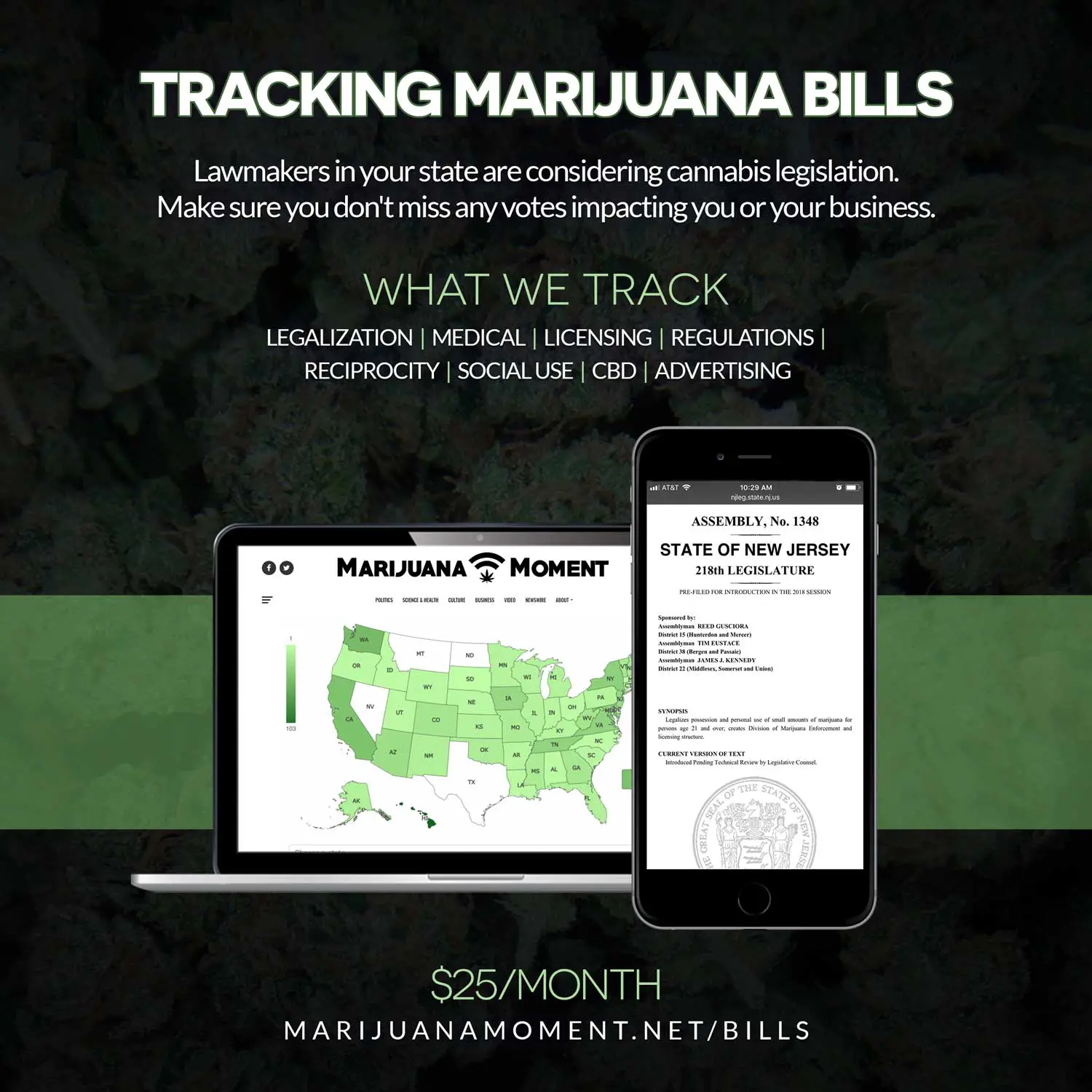
Learn more about our marijuana bill tracker and become a supporter on Patreon to get access.
—
Meanwhile, last month, state regulators finalized rules for marijuana social consumption loungues.
Separately, the state Cannabis Control Commission (CCC) recently launched an online platform aimed at helping people find jobs, workplace training and networking opportunities in the state’s legal cannabis industry.
State lawmakers have also been considering setting tighter restrictions on intoxicating hemp-derived products and a plan to allow individual entities to control a larger number of cannabis establishments.
Also in Massachusetts, legislators who were working on a state budget butted heads with CCC officials, who’ve said they can’t make critical technology improvements without more money from the legislature.
Massachusetts lawmakers additionally approved a bill to establish a pilot program for the regulated therapeutic use of psychedelics. And two committees have separately held hearings to discuss additional psilocybin-related measures.