Politics
Marijuana Saw Some Big Moments In 2025—From Trump’s Rescheduling Order To State Legalization Momentum

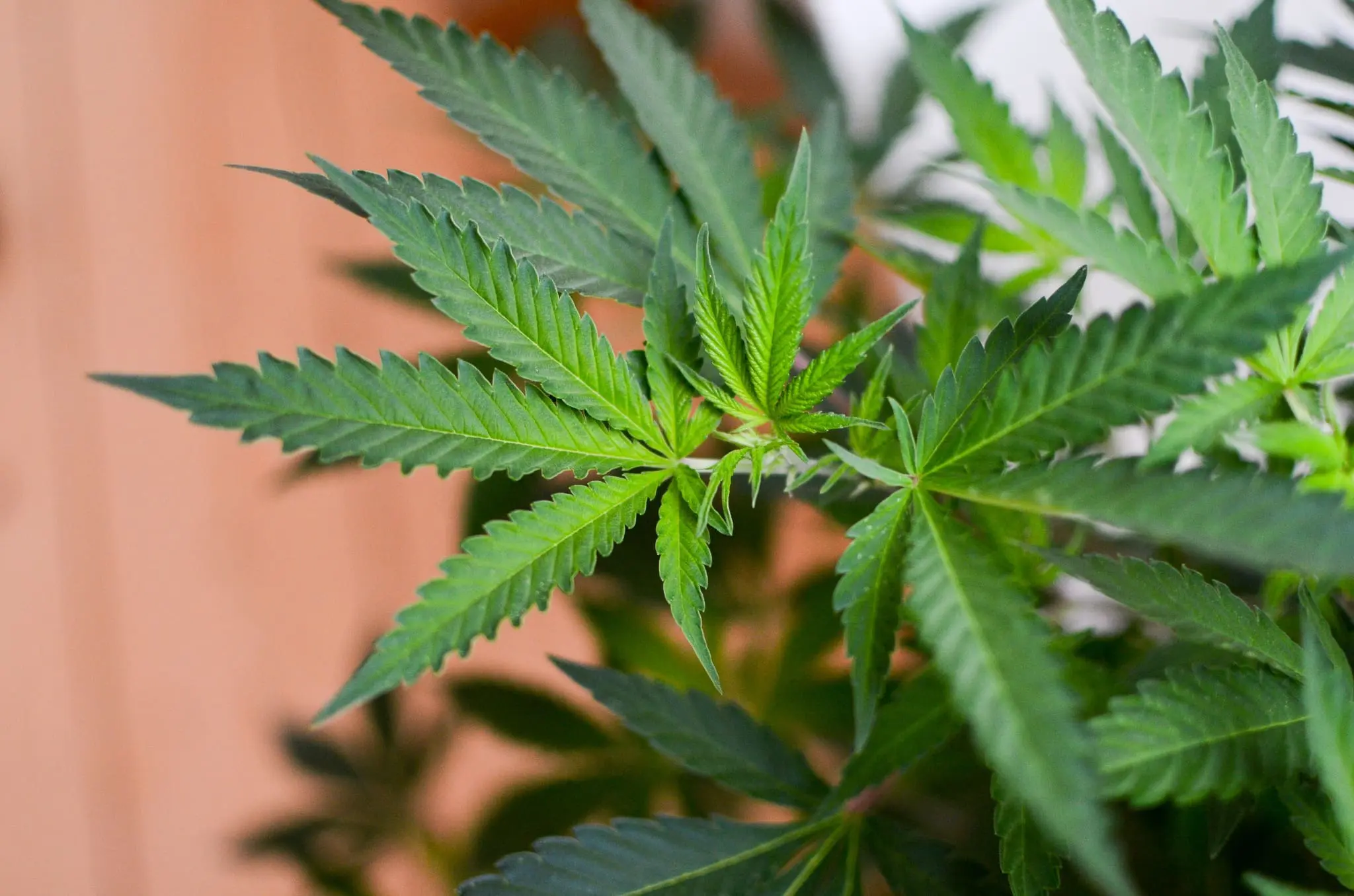
As 2025 comes to a close, the cannabis world is reflecting on the sometimes dizzying series of political, legal and cultural shifts that took place this year—and looking ahead to further developments that advocates and industry stakeholders will be navigating in the new year.
Top of mind, of course, is President Donald Trump’s executive order this month directing the attorney general to complete the process of moving marijuana from Schedule I to Schedule III of the Controlled Substances Act (CSA), marking perhaps the most significant administrative cannabis action in U.S. history.
But from the White House to the U.S. Supreme Court to state legislatures across the country, there were additional meaningful marijuana developments this year. That includes the upending of key provisions of federal law that had legalized hemp and its derivatives.
What 2026 will bring is yet to be seen. Many eyes will be focused on how the Justice Department approaches the president’s rescheduling directive, but some see opportunities for further reform—with optimism that there’s momentum to see through a bipartisan banking bill, for example.
And hopes are high that additional states could legalize cannabis in 2026—though advocates are also preparing to fight prohibitionist efforts to roll back wins that have already been achieved in other states.
Looking back at 2025, here are the top marijuana moments:
Trump signs marijuana rescheduling executive order
After campaigning on a promise to reschedule marijuana ahead of his second term–and months of relative silence on cannabis issues after taking office—Trump in December signed an executive order directing the attorney general to expeditiously complete the process of moving cannabis to Schedule III.
The reform hasn’t been finalized yet, but if it is, the policy change would mark one of the most substantial changes to federal marijuana laws since its prohibition over half a century ago.
Rescheduling wouldn’t legalize the plant, but it would recognize its medical value, allow marijuana businesses to take federal tax deductions and loosen certain research barriers.
In addition to rescheduling, Trump administration announces policy to expand access to CBD
Trump’s executive order also urged Congress to examine updating the definition of hemp to ensure that full-spectrum CBD is accessible to patients. If lawmakers do so, it could mitigate some concerns in the sector about a recent spending bill the president signed with provisions that would broadly ban consumable hemp products.
A further redefinition of hemp would be part of a novel proposal to allow Medicare recipients to access non-intoxicating CBD that’d be covered under the federal health care plan.
U.S. Supreme Court declines to take landmark case challenging prohibition
Advocates and stakeholders were handed a defeat from the Supreme Court in December after justices declined to accept a case challenging the constitutionality of federal marijuana prohibition—an issue that even one of the bench’s more conservative members, Justice Clarance Thomas, had previously argued must be resolved amid the state legalization movement.
Massachusetts-based marijuana businesses had asked the court to take their case because they argued that federal law unconstitutionally prohibits intrastate cannabis activity, contravening the Commerce Clause.
Justices weigh federal gun ban for marijuana consumers
In October, meanwhile, the Supreme Court agreed to hear a case on the constitutionality of a federal law prohibiting people who use marijuana or other drugs from buying or possessing firearms.
The Trump administration has argued that the policy “targets a category of persons who pose a clear danger of misusing firearm” and should be upheld.
Trump signs spending bill with hemp ban provisions
In November, the president signed appropriations legislation that includes provisions to ban most consumable hemp products that have proliferated since the crop was legalized under the 2018 Farm Bill that Trump signed during his first term in office.
The hemp components won’t be implemented until one year after enactment, however, and stakeholders and certain lawmakers say that window could provide an opportunity to advance legislation to create an alternative regulatory model for cannabinoid products.
Congressional lawmakers file cannabis bills and hold hearings on various marijuana issues
A slew of cannabis bills were filed or refiled for the 119th Congress in 2025, including those that would federally legalize marijuana, take steps to prepare for the eventual end of prohibition, stop the implementation of a federal hemp THC product ban, prevent people from using federal financial assistance at marijuana dispensaries, protect military veterans from losing government benefits for using medical cannabis in compliance with state law and more.
None of those measures advanced to enactment, though lawmakers did approve amendments to a spending bill that would have authorized U.S. Department of Veterans Affairs (VA) doctors to issue medical marijuana recommendations to military veterans and support psychedelics research and access. Even though versions of the veterans’ medical cannabis amendment were approved by both the House of Representatives and Senate, the reform was stripped out of a final spending bill sent to the president.
And while there’s been disappointment about the lack of progress on cannabis industry banking issues, a Senate subcommittee did take up the subject at a hearing in December that featured a former state marijuana regulator as a witness.
Trump administration rescinds Biden-era marijuana enforcement guidance
The Trump administration quietly rescinded guidance implemented under former President Joe Biden that ordered U.S. prosecutors to be “extremely cautious” about how to handle cannabis cases.
In November, the U.S. Attorney’s Office for the District of Wyoming disclosed that the guidance was rescinded in September, and it said cases involving marijuana would consequently be “rigorously” enforced on federal land.
Federal immigration officials raid California marijuana business
Marijuana farms operated by a major state-licensed business in California were raided by federal officials in July. The action didn’t appear to be a targeted effort by the federal government against the state-legal cannabis industry specifically, as other reports indicated that Immigration and Customs Enforcement (ICE) agents had been involved in numerous enforcement actions in the area at the time.
American medical cannabis patient released from Russian prison after possession conviction
An American who was released from a Russian prison over marijuana possession he obtained as a lawful medical cannabis patient in Pennsylvania was among President Donald Trump’s invited guests at a speech before a joint session Congress on in March.
Marc Fogel—who was serving a 14-year sentence in Russian after being convicted of “drug smuggling” over possession of a half-ounce of cannabis and whose release was secured as part of a prisoner swap—was in attendance at the president’s speech on Capitol Hill.
Vice President JD Vance and U.S. Health and Human Services (HHS) Secretary Robert F. Kennedy, Jr. participate in conference with psychedelics panel
Vance, Kennedy, Food and Drug Administration (FDA) Commissioner Marty Makary and other top Trump administration officials attended a “Make America Healthy Again” summit that featured a session on the therapeutic potential of psychedelics.
Mehmet Oz, the administrator of the Centers for Medicare and Medicaid Services (CMS), and Katie Miller, wife of Trump adviser Stephen Miller, were also among those who attended the event, which was meant to broadly showcase the MAHA agenda and areas of innovation in public health.
State-level legalization efforts gain momentum
Although no additional states enacted cannabis legalization laws in 2025, reform legislation did advance—demonstrating momentum that advocates hope to build upon in 2026.
The Pennsylvania House of Representatives in March passed a bill to legalize marijuana sales through a novel system of state-owned dispensaries, but it was rejected in the GOP-controlled Senate.
Two Hawaii Senate panels in February approved a broad bill that would legalize adult-use marijuana and bring together hemp and cannabis regulation under a single state agency. Also, the full Senate gave approval to a bill that would, among other changes, allow healthcare providers to recommend cannabis to treat any condition they believe it would benefit.
The New Hampshire House of Representatives approved bills to legalize marijuana, decriminalize the use and possession of psilocybin by adults and double the amount of medical cannabis that state-registered patients can purchase and possess.
The Virginia legislature approved legislation to legalize adult-use cannabis sales, only to have it once again vetoed by the governor.
Marijuana sales launch in Delaware, Minnesota and Kentucky
Adult-use marijuana sales began in Delaware and Minnesota in 2025, while medical cannabis dispensaries opened their doors in Kentucky.
States impose hemp bans amid concerns over intoxicating cannabinoid products
As congressional lawmakers moved to recriminalize certain hemp products, red and blue states—from Texas to Ohio to California—took steps on their own to restrict the sale of consumable cannabinoids.
Virginia elects pro-cannabis governor as legislative commission unveils legalization plan
Efforts to legalize adult-use marijuana sales in Virginia got a boost with the election of Abigail Spanberger as the state’s next governor.
And the legislature’s Joint Commission to Oversee the Transition of the Commonwealth into a Cannabis Retail Market subsequently unveiled a much-anticipated proposal to legalize recreational marijuana sales that it is recommending lawmakers pass during the 2026 session.
Florida campaign makes another run to legalize adult-use marijuana through the ballot
The campaign Smart & Safe Florida filed a new cannabis legalization initiative that they hope will go before voters next November. And after collecting what they estimated to be more than one million signatures to secure ballot placement amid litigation, Florida’s attorney general asked the state Supreme Court to review the constitutionality of the proposal.
Anti-marijuana activists plot to undermine state legalization laws
In three states—Arizona, Maine and Massachusetts—prohibitionist activists have made moves to put initiatives on the ballot next year to roll back key components of adult-use legalization laws, focusing largely on the elimination of the commercial market.
More developments arise in state-level drug policy ballot campaigns
An Idaho campaign unveiled a since-certified initiative to put medical marijuana legalization on the state’s 2026 ballot.
In Oregon, activists withdrew a ballot proposal to legalize marijuana social consumption lounges.
And in Alaska, a campaign said it failed to collect enough signatures to put an initiative to legalize certain psychedelics such as psilocybin and DMT on the ballot next year—but activists emphasized that the “work is far from over” as they shift focus to placing the reform measure before voters in 2028.
New York marks milestones in marijuana market expansion
After a rocky rollout of the state’s adult-use marijuana law, marred by lawsuits and regulatory complications, New York officials in November celebrated the opening of its 500th legal cannabis dispensary—touting the fact that there have been $2.3 billion in sales since the market launched, supporting an estimated 25,000 jobs across the industry.
States move forward with psychedelics reform
Over the summer, Texas Gov. Greg Abbott (R) signed into law a bill to create a state-backed research consortium to conduct clinical trials on ibogaine as a possible treatment for substance use disorders and other mental health conditions.
And in Arizona, officials approved and funded a first-in-the-nation clinical trial investigating the potential of whole mushroom psilocybin to treat post-traumatic stress disorder (PTSD) in first responders and military veterans.
New Jersey gubernatorial election raises hopes for reform
New Jersey voters elected U.S. Rep. Mikie Sherrill (D-NJ) to serve as the state’s next governor, meaning there’s now a decidedly clearer path to advancing a marijuana policy reform long awaited by consumers and advocates in the Garden State: A home grow option.
Target launches pilot program for hemp beverage sales
In one of the latest examples of the normalization of cannabis in mainstream commercial marketing, the retail giant Target soft launched sales of THC-infused beverages at select stores in Minnesota.
Edible Arrangements offshoot embraces the hemp industry
The company behind Edible Arrangements is entering the cannabis market, launching a new delivery service for hemp products. Edible Brands, best known for its line of ornate fruit arrangements, announced in March that it was expanding to start selling different kinds of edibles: hemp gummies, drinks and supplements.
Photo courtesy of Philip Steffan.