Politics
Marijuana Advocates Hope Trump’s Attorney General Will Give A Rescheduling Update At Congressional Hearing


U.S. Attorney General Pam Bondi is scheduled to appear before a key House committee next week—and advocates are holding out hope that lawmakers will press her to provide an update on the Justice Department’s progress in fulfilling President Donald Trump’s executive order to finalize the pending federal marijuana rescheduling process.
It’s been nearly two months since the president instructed Bondi to complete the process of moving cannabis from Schedule I to Schedule III of the Controlled Substances Ac (CSA). The attorney general hasn’t publicly commented on the directive, however, and DOJ officials have offered little insight into the status of the rescheduling proposal.
A Justice Department spokesperson told Marijuana Moment last month that it had no “comment or updates” to share on the topic. However, an agency official more recently told Salon that “DOJ is working to identify the most expeditious means of executing the EO.”
That phrasing is notable, signaling that the department is uncertain about the administrative pathway to finalize rescheduling. The hope among advocates and industry stakeholders was that the process would be more simple, with a final signature on the existing reform proposal that was released following a scientific review initiated under the prior Biden administration.
Bondi opposed cannabis reform as Florida’s attorney general and she didn’t attend Trump’s signing ceremony for the rescheduling executive order, but reform supporters see the upcoming House Judiciary Committee hearing that’s scheduled for Wednesday as an opportunity for her to signal that progress is being made with following through on the president’s directive.
“By statute, the U.S. attorney general holds significant influence when it comes to the rescheduling process. Yet, Pam Bondi’s noticeable absence from the administration’s executive order signing, coupled with her prior history as a high-profile opponent of state-level marijuana reform and her ongoing failure to speak about the issue publicly, is cause for speculation,” NORML Deputy Director Paul Armentano told Marijuana Moment.
“Let’s hope the attorney general seizes this opportunity to provide some long-overdue clarity as to where things currently stand in what has been, thus far, a protracted and far from transparent process,” he said.
Adam Smith, executive director of the Marijuana Policy Project (MPP), similarly said that “we hope Bondi takes the opportunity next week to update the community on DOJ’s progress fulfilling the president’s order.”
“While rescheduling is far from a solution to medical access and even less so for cannabis policy overall, it would represent an acknowledgment, at long last, by the federal government of the plant’s many medical benefits. That is a step in the right direction,” he told Marijuana Moment. “With millions of Americans using cannabis to successfully combat conditions like chronic pain, PTSD and seizures, the DOJ should move swiftly to fulfill the promise of the president’s executive order and complete the rescheduling process that has already taken far too long.”
It remains to be seen whether Bondi will be asked about or proactively raise the subject at the congressional hearing on Wednesday. Members will have opportunities to press the top DOJ official on issues they see fit for discussion, but other issues such as the disclosure of records related to Jeffrey Epstein may be prioritized.
That said, there are a number of lawmakers on the committee who have championed marijuana policy reform—and there’s also increased pressure from the cannabis community to understand where the administration is at weeks after Trump’s executive order to expeditiously implement rescheduling was issued.
The directive is overwhelmingly popular among cannabis consumers, according to a new poll from the cannabis telehealth platform NuggMD.
About 83 percent of respondents said they support the executive order, compared to 7 percent who expressed opposition and 10 percent who said they didn’t have an opinion about the proposed reform.
DOJ has been notably silent on the issue in the weeks since Trump signed the order—even as the White House recently touted the president’s order as an example of a policy achievement during the first year of his second term.
Former Rep. Matt Gaetz (R-FL), Trump’s first pick for attorney general this term who ultimately withdrew his nomination, raised eyebrows last week after posting on X that he’s been told the Drug Enforcement Administration (DEA) is actively drafting a rescheduling rule and intended to issue it “ASAP.”
There’s some confusion around that point, however, as a rule is already pending before the Justice Department—and a new rule would presumably be subject to additional administrative review and public comment.
Last week, meanwhile, the White House declined to comment on the status of the rescheduling process, deferring Marijuana Moment to the Justice Department.
A Democratic senator told Marijuana Moment earlier this month that it’s “too early to tell” what the implications of Trump’s cannabis order would be—saying that while there are “things that look promising” about it, he is “very concerned about where the DOJ will land.”
“The ability of the Trump administration to speak out of both sides of their mouth is staggering,” Sen. Cory Booker (D-NJ) said. “So I’m just going to wait and see right now. Obviously, there’s things that look promising—to end generations of injustice. I really want to wait and see.”
—
Marijuana Moment is tracking hundreds of cannabis, psychedelics and drug policy bills in state legislatures and Congress this year. Patreon supporters pledging at least $25/month get access to our interactive maps, charts and hearing calendar so they don’t miss any developments.
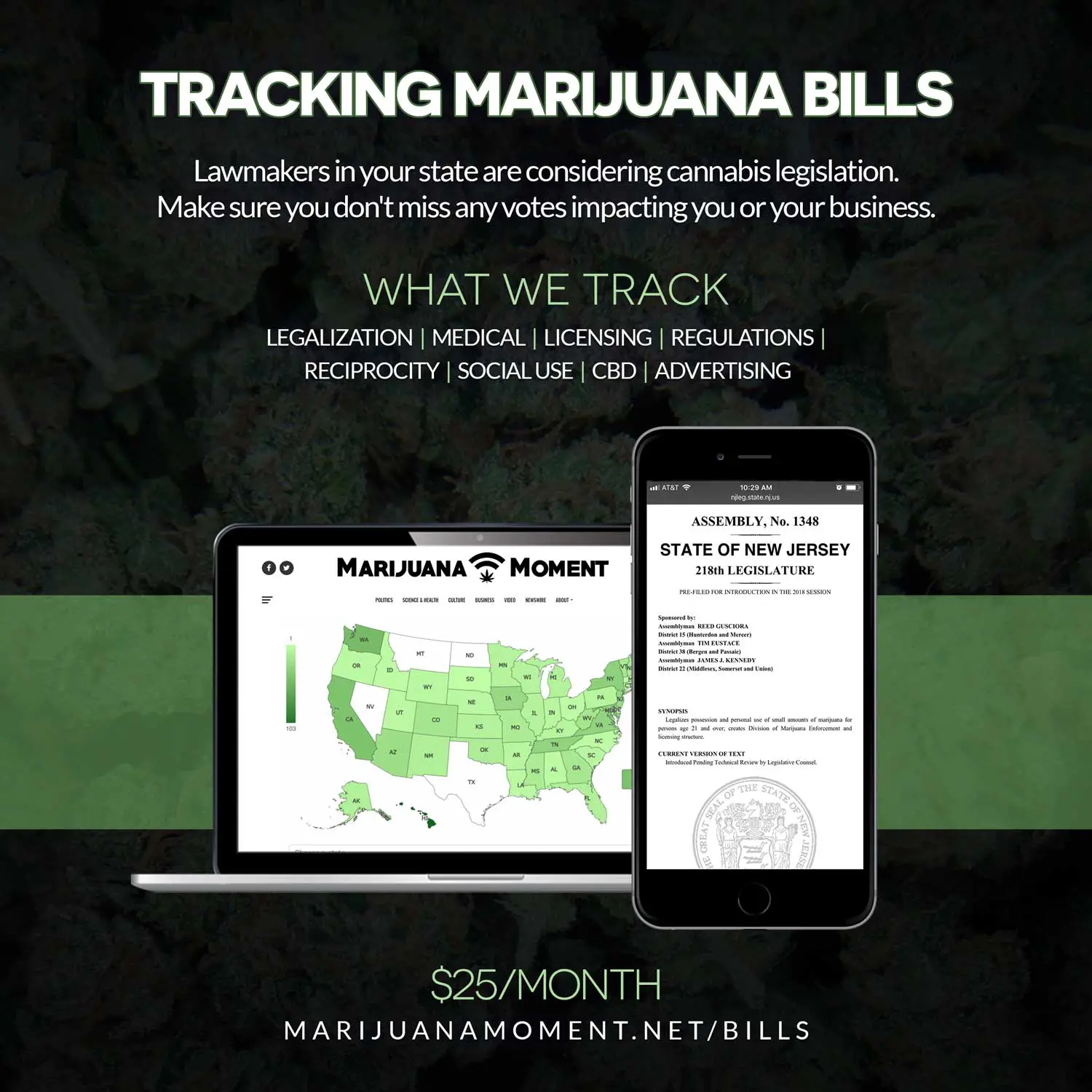
Learn more about our marijuana bill tracker and become a supporter on Patreon to get access.
—
Also last month, two GOP senators filed an amendment to block the Trump administration from rescheduling cannabis, but it was not considered on the floor.
Meanwhile, last month, DEA said the cannabis rescheduling appeal process “remains pending” despite Trump’s executive order.
A recent Congressional Research Service (CRS) report discussed how DOJ could, in theory, reject the president’s directive or delay the process by restarting the scientific review into marijuana.
Bondi separately missed a congressionally mandated deadline last month to issue guidelines for easing barriers to research on Schedule I substances such as marijuana and psychedelics.
Photo courtesy of Chris Wallis // Side Pocket Images.