Politics
Maine GOP Lawmaker Says Anti-Marijuana Activists Are ‘Lying’ To Mislead Voters Into Signing Legalization Repeal Ballot Petition


A Maine Republican lawmaker and marijuana industry advocates are sounding the alarm about alleged misleading petition tactics being used by a campaign seeking to put an initiative on the November ballot to roll back the state’s voter-approved cannabis legalization law.
A video shared by Rep. David Boyer (R) on Friday features an image of a person seemingly collecting signatures for a ballot measure and an audio recording where he significantly misrepresents what the cannabis proposal would accomplish, claiming that its primary intent is to ensure product safety with enhanced testing requirements.
In reality, the initiative would end regulated recreational marijuana sales as approved by voters in 2016. Possession of up to 2.5 ounces of cannabis would remain legal, but adults would no longer be able to grow plants for personal use or buy adult-use cannabis from licensed stores.
“We’re trying to make it more regulated. So some people are selling old weed and molded. They keep it in the storage or something. We’re trying to make it to where it’s regulated, like restaurants,” the petitioner is heard saying. “You don’t go in a restaurant eat [off] dirty dishes. They got to sanitize it. We just trying to have it more standardized.”
“It doesn’t take away from having it. It just makes it when you go buy it, it’s not old,” he said. “Because weed can get mold on it, and people just [selling] it, they don’t care. Like you can’t sell spoiled milk. You gotta throw it away.”
There is a testing component to the proposed initiative as it concerns medical marijuana, with a revised regulatory structure. But the notion that it would improve product safety for recreational cannabis is difficult to square given the removal of legal access to regulated products that it contemplates.
Asked whether the measure would repeal the existing home grow option for consumers, the petitioner said, “No, you can still possess” marijuana. He then volunteered that he’s an out-of-state petitioner from Texas who gets paid “a dollar a signature.”
Boyer, the Republican legislator who led the fight to pass cannabis legalization at the ballot about 10 years ago when he was a staffer for the Marijuana Policy Project (MPP), said he’s “getting reports from Bangor to Biddeford” about petitioners peddling misleading claims about the repeal initiative.
“Out of state petitioners are straight up lying to get the cannabis repeal on the ballot. The initiative wipes out adult use and home grow rights!” he said. “DON’T SIGN AND MAKE SURE OTHERS DON’T EITHER.”
The lawmaker isn’t the only one calling attention to the alleged duplicity with the ballot campaign.
Stephen Dunker, co-founder of the Maine-based marijuana shop OG Cannabis, told Marijuana Moment in an email on Saturday that there are “serious” concerns about the language of the measure itself, which purports to be about strengthening the state’s medical marijuana program, without making clear it would also upend the adult-use market.
“Voters deserve transparency, not deceptive ballot language designed to trick them into signing,” he said in an email.
Meanwhile, a Republican gubernatorial candidate in Maine also recently implored voters not to sign the petition to put the “really dumb” cannabis repeal initiative on this year’s ballot.
“It’s dumb. It’s a dumb idea. Let’s focus on the things that really matter—the things that are going to make Maine a better place,” David Jones, a real estate executive who previously ran for governor in 2006, said last month.
The proposal, which officials cleared for signature gathering last month month—is titled “An Act to Amend the Cannabis Legalization Act and the Maine Medical Use of Cannabis Act.” It’s a revised version of a marijuana initiative filed in September that was backed by a Republican state senator and a former top staffer to then-Gov. Paul LePage (R), a staunch prohibitionist.
Madison Carey, who was listed as the chief petitioner of the original version of the repeal initiative and remains involved in the current campaign, told Marijuana Moment last month that “there needs to be regulations on marijuana,” arguing that her experience recovering from an opioid misuse disorder speaks to the insufficiency of current law.
“My hope is to just bring awareness to the reality of the potential dangers of not having regulations,” she said. “I think people are fed up with the constant use—the constant [retail businesses] coming up where people can now legally purchase marijuana.”
Of course, repealing the voter-approved law that enacted a system of licensed adult-use sales would eliminate the current regulatory infrastructure that’s in place, which reform advocates argue helps mitigate the public health and safety risks associated with the illicit market.
Under the measure, the director of the Office of Cannabis Policy would face a mandate to “promote the health and well-being of the people of the state and advance policies that protect public health and safety, emphasizing the health and well-being of minors, as priority considerations in performing all duties.”
They would also have to “ensure that qualifying patients maintain access to high-quality, effective and affordable cannabis for medical use under this Act.”
The Department of Administrative and Financial Services would be required to create a testing program for cannabis products, requiring dispensaries and caregivers to submit such products to a licensed facility for a safety assessment before they’re distributed to qualified patients.
The testing facility would need to “ensure that the cannabis or cannabis product does not exceed the maximum level of allowable contamination for any contaminant that is injurious to health and for which testing is required and to ensure correct labeling.”
“The department shall adopt rules establishing a testing program pursuant to this section, rules identifying the types of contaminants that are injurious to health for which cannabis and cannabis products must be tested under this chapter and rules regarding the maximum level of allowable contamination for each contaminant,” the ballot initiative text states.
Further, regulators would need to administer a system for tracking cannabis plants from seedings to the point of retail sale or disposal. That system would have to “allow for cannabis plants at the stage of cultivation and upon transfer from the stage of cultivation to another registrant to be tracked by group.”
Activists must submit at least 67,682 valid voter signatures by February 2, 2026 in order to qualify for next year’s ballot. If approved by voters, the initiative would take effect beginning on January 1, 2028.
This is one of three active campaigns underway in 2026 to reverse course on state cannabis laws.
In Massachusetts, anti-marijuana activists are also being accused of using deceptive messaging to mislead voters into signing their repeal petition—and state election officials have scheduled a hearing for this week to investigate a complaint challenging the campaign’s signature gathering process.
The Secretary of the Commonwealth’s Elections Division has already confirmed that the campaign collected enough valid signatures to send the measure to lawmakers for consideration ahead of potentially being placed on the November ballot.
A recently filed ballot initiative in Arizona, meanwhile, would also repeal of key provisions of the state’s voter-approved marijuana legalization law by eliminating commercial sales, while still permitting possession and personal cultivation.
—
Marijuana Moment is tracking hundreds of cannabis, psychedelics and drug policy bills in state legislatures and Congress this year. Patreon supporters pledging at least $25/month get access to our interactive maps, charts and hearing calendar so they don’t miss any developments.
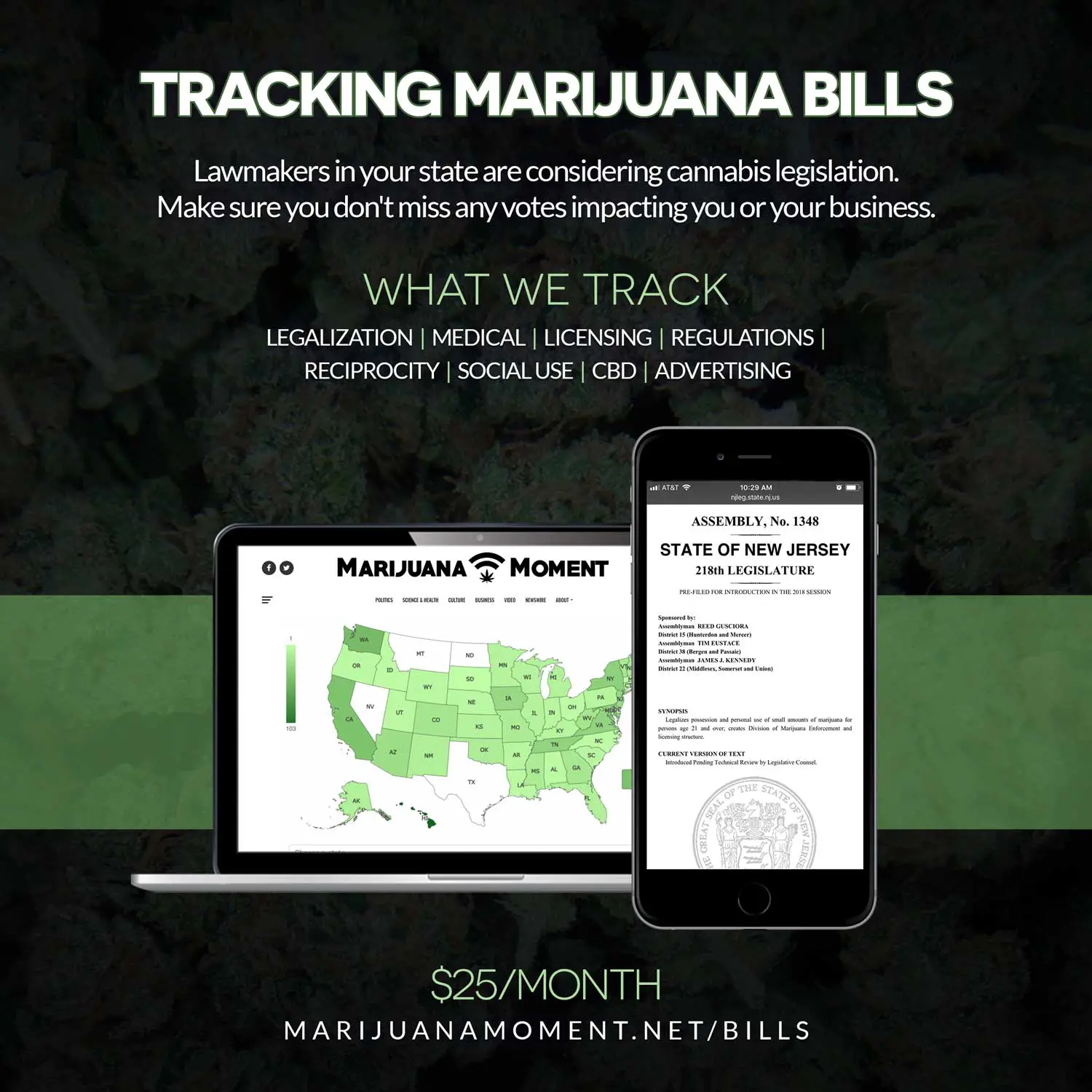
Learn more about our marijuana bill tracker and become a supporter on Patreon to get access.
—
Back in Maine, legislators last June rejected a bill to legalize possession of up to one ounce of psilocybin by adults 21 and older.
That followed a separate effort in the state in 2024 to legalize psilocybin and allow adults to access the psychedelic at state-licensed facilities. But lawmakers watered down that bill—amending it to create a commission to further explore the reform instead—and it ultimately did not pass.
Meanwhile, Maine lawmakers last year voted to investigate possible conflicts of interest by a top marijuana official.
And in 2024, a law took effect allowing people to apply to have records of now-legal marijuana crimes sealed.
Photo courtesy of Philip Steffan.