Politics
Kentucky’s First Medical Marijuana Dispensary Will Open In ‘Next Couple Of Weeks,’ Governor Says, Touting Cannabis As Opioid Alternative

Kentucky’s governor says the state is “very, very close” to launching its medical marijuana program, which he expects to happen “within the next couple of weeks”—a move he says will help thousands of patients find an alternative to opioids for pain management.
During a press briefing on Thursday, Gov. Andy Beshear (D) was asked by a reporter to provide a status update on the medical cannabis law. He said the first dispensary, based in Ohio County, is set have “product on its shelf” in weeks.
“But we believe it’s going to scale up very quickly from that first moment,” the governor said.
Beshear went through more granular details about the program’s progress, touting the fact that 23,757 patients have received their e-certifications to access cannabis, including 1,756 who qualified to treat symptoms of cancer and 15,412 with chronic pain who would have “otherwise been taking opioids, which is one of the reasons that we’ve pushed this program so hard.”
With respect to marijuana business licensing, the state has so far approved 16 cultivators, 48 dispensaries and six safety compliance facilities. Officials have additionally certified 506 doctors to issue medical cannabis recommendations.
“Our Office of Medical Cannabis had staff in three different locations completing facility inspections,” Beshear added, “so what that means is, within one year of awarding cultivation licenses, we now have multiple cultivators with harvested product that are in the testing phase.”
“We are very, very close,” he said.

The governor made much of crossing a 15,000 patient registration milestone in late October, but that’s evidently grown meaningfully in recent weeks.
The state’s first medical cannabis dispensary was officially approved for operations in August, which Beshear called “another step forward as we work to ensure Kentuckians with serious medical conditions have access to the medicine they need and deserve.”
He previously touted an earlier success in the state’s forthcoming medical marijuana program, with a licensed cultivator producing “the first medical cannabis inventory in Kentucky history.”
In July, Beshear sent a letter to President Donald Trump, urging him to reject congressional spending bill provisions that would prevent the Justice Department from rescheduling marijuana.
In the letter to the president, he emphasized that a pending proposal to move cannabis from Schedule I to Schedule III under the Controlled Substances Act (CSA) is something “you supported in your presidential campaign.”
“That process should be allowed to play out. Americans deserve leadership that won’t move the goalposts on them in the middle of the game,” Beshear said, noting that he was among the tens of thousands who submitted public comments in favor of the reform after it was initiated under the Biden administration, “demonstrating broad public interest in rescheduling.”
“I joined that effort because this is about helping people. Rescheduling would provide suffering patients the relief they need,” the governor said. “It would ensure communities are safer—because legal medical products reduce the illicit market. It would provide new, meaningful research on health benefits.”
Beshear also mentioned a letter to DEA he signed onto last year urging rescheduling, “because the jury is no longer out on marijuana. It has medical benefits.”
Back on the state level, the governor recently said he acknowledges that “it’s taken longer than we would have liked” to stand up the industry since he signed medical marijuana legalization into law in 2023.
In recognition of that delayed implementation, he recently signed an executive order to waive renewal fees for patients who get their cards this year so that they don’t get charged again before retailers open. And another order he signed providing protections for qualified patients who obtain medical marijuana outside of Kentucky “will stay in place.”
Beshear separately announced in May that the state has launched a new online directory that lets people see where medical cannabis dispensaries will be opening near them.
He emphasized that the state has been working to deliver access to patients “at the earliest possible date,” and that involved expediting the licensing process. The governor in January also ceremonially awarded the commonwealth’s first medical marijuana cards.
—
Marijuana Moment is tracking hundreds of cannabis, psychedelics and drug policy bills in state legislatures and Congress this year. Patreon supporters pledging at least $25/month get access to our interactive maps, charts and hearing calendar so they don’t miss any developments.
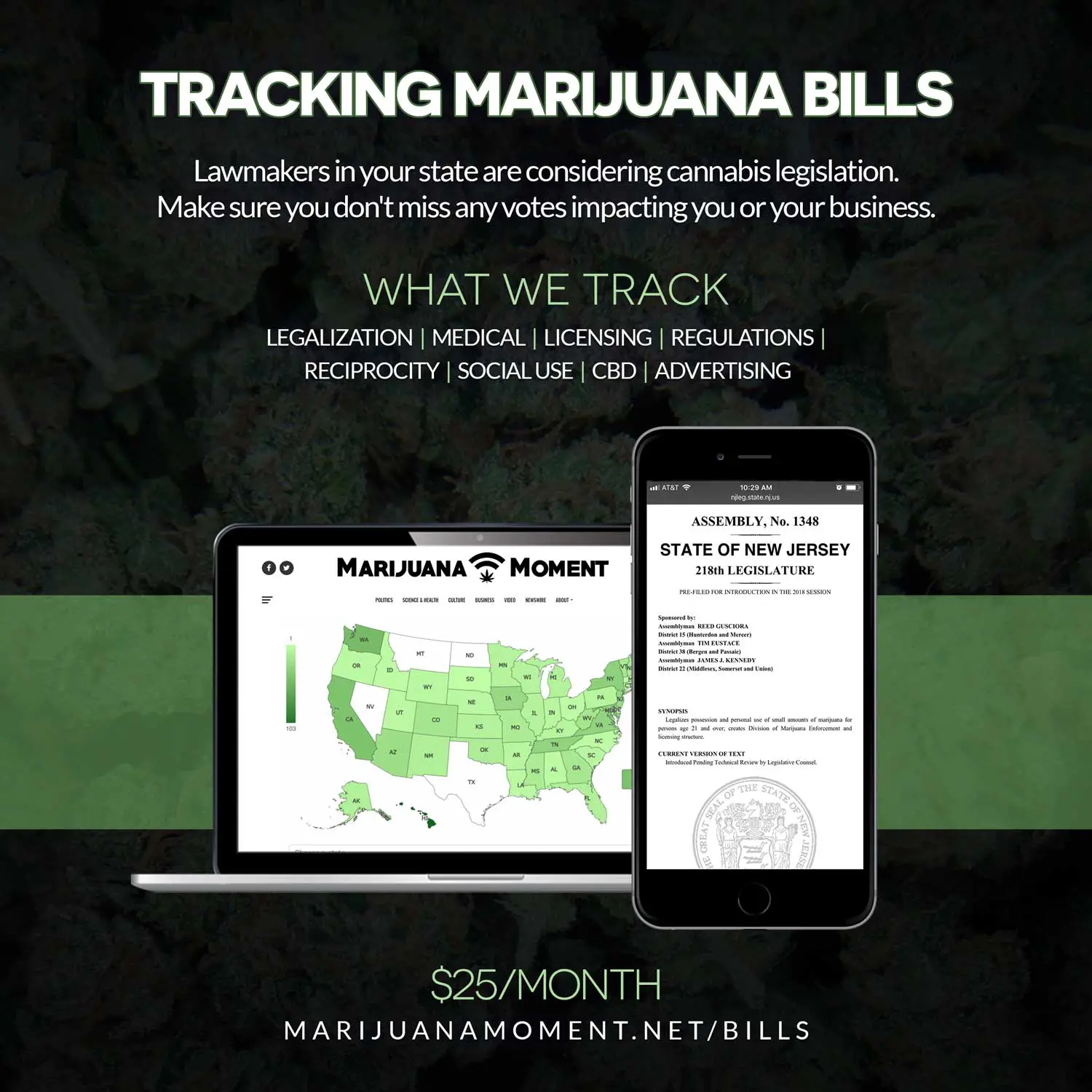
Learn more about our marijuana bill tracker and become a supporter on Patreon to get access.
—
Meanwhile, the governor sent a letter to Kentucky’s congressional delegation in January, “urging them to take decisive action to protect the constitutional rights of our law abiding medical cannabis patients” by repealing the federal ban on gun possession by people who use marijuana.
That came after bipartisan Kentucky senators filed legislation that similarly called on the state’s federal representatives to take corrective action, which Beshear said he supports but would like to see even more sweeping change on the federal level.
The federal Bureau of Alcohol, Tobacco, Firearms and Explosives (ATF) warned Kentucky residents late last year that, if they choose to participate in the state’s medical marijuana program, they will be prohibited from buying or possessing firearms under federal law.
As far as the implementation of the state’s medical cannabis law goes, Beshear said in his State of the Commonwealth address in January that patients will have access to cannabis sometime “this year.” He also later shared tips for patients to find a doctor and get registered to participate in the cannabis program.
Health practitioners have been able to start assessing patients for recommendations since the beginning of last December.
While there currently aren’t any up-and-running dispensaries available to patients, Beshear has further affirmed that an executive order he signed in 2023 will stay in effect in the interim, protecting patients who possess medical cannabis purchased at out-of-state licensed retailers.
During last year’s November election, Kentucky also saw more than 100 cities and counties approve local ordinances to allow medical cannabis businesses in their jurisdictions. The governor said the election results demonstrate that “the jury is no longer out” on the issue that is clearly supported by voters across partisan and geographical lines.