Politics
Joe Rogan Surprised After GOP Senator Says Marijuana And Alcohol Industries Jointly Backed Push To Ban Hemp THC Products


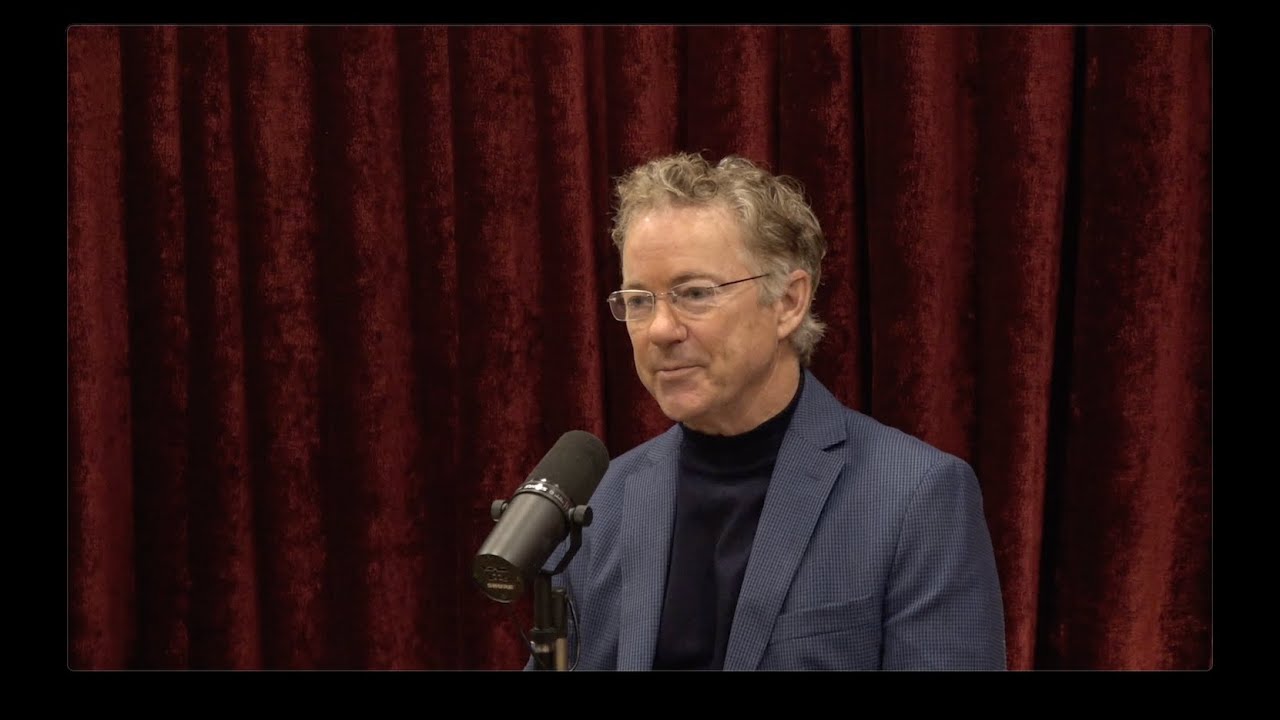
Joe Rogan seemed stunned to hear Sen. Rand Paul (R-KY) tell him on a new episode of his podcast that certain marijuana businesses joined hands with the alcohol industry to lobby in favor of a federal ban on most hemp THC products.
During a wide-ranging interview on the Joe Rogan Experience that aired on Tuesday, the senator discussed his months-long effort to fight against the recriminalization of hemp under a spending bill signed into law by President Donald Trump in November.
Paul again faulted his home-stare colleague Sen. Mitch McConnell (R-KY) for spearheading the ban, which hemp industry stakeholders say would effectively eradicate the industry that’s evolved since the crop was federally legalized under the 2018 Farm Bill that Trump signed during his first term.
“He is very, very powerful, and a lot of people owe him,” Paul said. “He raised money for decades—hundreds of millions of dollars, passed it out to the lesser-known senators and helped them get elected when they would get challenges—and so then they all owe him.”
While he faced criticism from some after holding up the appropriations legislation over the hemp provisions, Paul said it was his “only choice” to protect the market after McConnell’s prohibitionist language was inserted.
Rogan asked whether the alcohol industry also played a role in lobbying for the ban. Paul didn’t disagree, but he said it was a “little bit” of influence from alcohol interests combined with some in the marijuana industry who have grown frustrated that hemp’s federally legal status means its producers can market across state lines while marijuana remains federally prohibited, with interstate commerce banned.
“The cannabis people hate the hemp people,” Paul said, while adding that the competitive conflict is “complicated.”
“The cannabis industry developed state-by-state—and you really can’t make a marijuana product in Colorado and sell it in Kentucky,” he said. “It can’t go across state lines. The hemp, because it was legalized nationally, they were selling it across state lines. So we have big companies now that sell the hemp. You can order them through the mail, across state lines, until this law came about.”
“McConnell always felt it was an unintended consequence. And some of the growth [of the industry] might have been, but I don’t think it was,” he continued. “There were some bad products out there, and all of us, including [hemp stakeholders], said, ‘Alright, let’s regulate this. Let’s not have 100 milligram gummies.'”
Marijuana businesses would “probably accept” the competition with the hemp industry if marijuana was federally legal, the senator said, but “we’ve legalized it state-by-state.”
Rogan and Paul also spoke more broadly about what they suggested is the hypocrisy of the hemp ban given that people who may benefit from cannabinoids like CBD and THC would lose access, even as pharmaceutical drugs with potentially harmful side effects have long been legally marketed and sanctioned by federal health officials.
“They’re protecting you so you can take Ambien, but god forbid you take a hemp gummy. They will put your ass in jail if you take a hemp gummy,” Paul said.
“So all the plants are illegal now. All the seeds are illegal. There’s a real industry of farmers who grow this. And the thing is, who are we to tell somebody who can’t sleep at night that an Ambien is better for them than than taking a hemp gummy to go sleep at night? Or a veteran who could take Percocet or some kind of psychotropic drug—or who has anxiety or post-traumatic stress—and we’re going to tell them they can’t take a hemp gummy? I think it’s insane and very much this presumption that we know what’s best for everyone.”
The senator said that he hasn’t personally used hemp products despite his advocacy for the industry and personal liberties around cannabis consumption.
“I’m for the freedom to take it, but I sleep pretty good,” he said. “It’s not really something I can attest to exactly how it works, but people who do take it tell me that have one of the drinks [and] it might be like drinking a beer, or maybe not even drinking a beer, when you drink one of these THC drinks.”
He also explained that one of the issues with the newly enacted law prohibiting most consumable cannabinoids derived from hemp, which is set to take effect next November, would likely make it so patients and consumers wouldn’t want to buy them anymore because of the severely restrictive THC limits.
“The McConnell language says you can’t have more than 0.4 milligrams [of THC], which is such a low number that I don’t think will have any effect. I mean, frankly, the THC is the effect,” Paul said. “And so if you make the THC number so small, I don’t think people will take them. The CBD oil people might still take some of that, but I assume that the effect that people are getting from the CBD oil, if they rub it on, has to be the THC.”
CBD on its own may still hold therapeutic potential for some patients, he acknowledged, but the way the law is written would re-criminalize levels of hemp THC at the plant- and seed-level, too. That means farmers would “have to re-hybridize all these plants” in order to stay in compliance.
Rogan, for his part, noted that his mother-in-law uses hemp-derived oil to treat symptoms of arthritis, and she’s found it significantly more effective when the non-intoxicating CBD contains small amounts of THC.
A friend of Rogan’s said the same principle has applied to his child with autism who sometimes experiences seizures. Scientists have described this multi-cannabinoid experience as the entourage effect, where the compounds appear to be more effective when combined rather than isolated.
The senator also emphasized that he’s “not here to tell you to take [cannabis] or not take it. I’m for the freedom for people to make their own decision.”
Paul also joked about how he often tells people that the same lawmakers who stand firmly opposed to letting people access cannabis must have attended the premiere of Reefer Madness in the 1930s and accepted the sensationalized claims about marijuana use as fact, without even challenging that narrative.
Rogan then shared a history lesson about the origins of the marijuana prohibitionist push, including the influence of a former publishing magnate, William Randolph Hearst, whose newspapers peddled various claims stigmatizing cannabis after technology developed to refine hemp as a paper alternative that threatened his company’s bottom line.
In positive news for hemp stakeholders, a Republican congressman this week introduced a bill that would give the hemp industry two more years before the federal ban on THC products would take effect, which stakeholders hope will better position them to negotiate a broader compromise with lawmakers.
Several bipartisan lawmakers, including the lead sponsor, protested as the spending legislation with the hemp ban provision advanced through Congress.
For what it’s worth, four in five marijuana consumers say they oppose the recriminalization of hemp THC products under the spending bill Trump signed. However, it should be noted that that poll was conducted weeks before he issued a cannabis rescheduling order and took steps to protect access to full-spectrum CBD.
Trump signed an executive order last month directing the attorney general to complete the process of moving marijuana from Schedule I to Schedule III of the Controlled Substances Act (CSA).
Part of that announcement also hold implications for the forthcoming hemp law. The president’s order also urged Congress to examine updating the definition of hemp to ensure that full-spectrum CBD is accessible to patients.
A further redefinition of hemp would be part of a novel proposal to allow Medicare recipients to access non-intoxicating CBD that’d be covered under the federal health care plan.
To effectuate that, the Centers for Medicare & Medicaid Services (CMS) will be announcing “a model that will allow a number of CMS beneficiaries to benefit from receiving CBD under doctor recommendation at no cost,” a White House official said during a briefing that Marijuana Moment first reported leaked details from ahead of the signing event.
Trump seemed endorse a more flexible CBD policy last summer when he shared a video calling for that specific reform while promoting the health benefits of cannabidiol, particularly for seniors.
Meanwhile, a separate recently filed Republican-led congressional bill would stop the implementation of the hemp ban under the enacted appropriations legislation.
Hemp businesses and industry groups have warned about the potential ramifications of the ban, but despite his support for states’ rights for cannabis and a recent social media post touting the benefits of CBD, Trump signed the underlying spending measure into law without acknowledging the hemp provisions.
GOP political operative Roger Stone said recently that Trump was effectively “forced” by Republican lawmakers to sign the spending bill with the hemp THC ban language.
However, a White House spokesperson said prior to the bill signing that Trump specifically supported the prohibition language.
The Democratic governor of Kentucky said that the hemp industry is an “important” part of the economy that deserves to be regulated at the state level—rather than federally prohibited, as Congress has moved to do.
Also, a leading veterans organization is warning congressional leaders that the newly approved blanket ban on consumable hemp products could inadvertently “slam the door shut” on critical research.
—
Marijuana Moment is tracking hundreds of cannabis, psychedelics and drug policy bills in state legislatures and Congress this year. Patreon supporters pledging at least $25/month get access to our interactive maps, charts and hearing calendar so they don’t miss any developments.
Learn more about our marijuana bill tracker and become a supporter on Patreon to get access.
—
Since 2018, cannabis products have been considered legal hemp if they contain less than 0.3 percent delta-9 THC on a dry weight basis.
The new legislation specifies that, within one year of enactment, the weight will apply to total THC—including delta-8 and other isomers. It will also include “any other cannabinoids that have similar effects (or are marketed to have similar effects) on humans or animals as a tetrahydrocannabinol (as determined by the Secretary of Health and Human Services).”
The new definition of legal hemp will additionally ban “any intermediate hemp-derived cannabinoid products which are marketed or sold as a final product or directly to an end consumer for personal or household use” as well as products containing cannabinoids that are synthesized or manufactured outside of the cannabis plant or not capable of being naturally produced by it.
Legal hemp products will be limited to a total of 0.4 milligrams per container of total THC or any other cannabinoids with similar effects.
Within 90 days of the bill’s enactment, the Food and Drug Administration (FDA) and other agencies will need to publish list of “all cannabinoids known to FDA to be capable of being naturally produced by a Cannabis sativa L. plant, as reflected in peer reviewed literature,” “all tetrahydrocannabinol class cannabinoids known to the agency to be naturally occurring in the plant” and “all other known cannabinoids with similar effects to, or marketed to have similar effects to, tetrahyrocannabinol class cannabinoids.”
The language slightly differs from provisions included in legislation that had previously advanced out of the House and Senate Appropriations panels, which would have banned products containing any “quantifiable” amount of THC, to be determined by the HHS secretary and secretary of agriculture.
Image element courtesy of Joe Rogan.