Politics
It’s ‘Unclear’ How Feds Will Enforce Hemp THC Product Ban, Congressional Researchers Say, Citing Limited FDA And DEA Resources

Congressional researchers say it “remains unclear” how the federal government might enforce a newly enacted law that takes effect next year banning hemp THC products—flagging concerns about a potential lack of resources on the part of the Food and Drug Administration (FDA) and Drug Enforcement Administration (DEA).
After President Donald Trump signed appropriations legislation late last month that included language that effectively “reimposes” hemp criminalization, the Congress Research Service (CRS) published an analysis about the policy change on Wednesday.
“While the change to the hemp definition will seemingly alter the legal status of many hemp products currently available on the market, it remains unclear if and how federal law enforcement will enforce the new prohibitions when the new definition goes into effect,” the researchers said.
Part of the uncertainty around hemp is related to the federal approach to marijuana, which has been legalized in some form in the vast majority of states but remains federally illegal as a Schedule I drug under the Controlled Substances Act (CSA).
“In marijuana’s case, the federal response has largely been to allow states to implement their own marijuana laws despite the fact that state-regulated activities may violate the [Controlled Substances Act],” CRS said. “If intoxicating hemp products persist on the market after the change to their legal status, it is possible they could be subject to the same criminal and collateral issues as marijuana.”
The analysis added, however, that it “remains to be seen” whether FDA will “pursue additional options to remove these [hemp] items from the market.
FDA and the Drug Enforcement Administration “may lack the resources to broadly enforce the laws prohibiting intoxicating hemp products on the market,” it said, adding that congressional lawmakers may also “choose to exercise oversight over federal enforcement priorities regarding state-regulated cannabis activities.”
FDA and DEA, “in coordination with the Department of Justice, have a range of civil and criminal remedies they may use in efforts to exercise control over these activities,” the report says.
Hemp was federally legalized under the 2018 Farm Bill that Trump signed during his first term, with then-Senate Majority Leader Mitch McConnell (R-KY) leading the push to end criminalization of the crop at the time. But the senator has insisted that the policy change wasn’t intended to allow consumable products with THC, so he’s been determined to close what he describes as a “loophole” in the law.
Sen. Rand Paul (R-KY) attempted to remove the hemp ban language from the spending bill Trump signed last month, but a majority of members voted to table his amendment.
Industry stakeholders, advocates and lawmakers are stressing the urgency of the situation. While the hemp ban won’t take effect until one year after enactment, that still leaves little time in the congressional calendar to reverse course or create an alternative regulatory framework for products set to be banned.
Paul, meanwhile, said last month that he’ll soon file a bill to protect the hemp industry from the impending hemp ban. And he also called out alcohol and marijuana interests for allegedly “join[ing] forces” to lobby in favor of the prohibitionist policy change, which will restrict access to a plant and its derivatives that are often used therapeutically.
The senator said the forthcoming legislation would make it so state policy regulating hemp cannabinoid products—with basic safeguards in place to prevent youth access, for example—”supersedes the federal law.”
On the other end of the debate, Rep. Andy Harris (R-MD), who helped secure the hemp re-criminalization language, said last month that he’s not concerned about attempts to undercut the enacted law, brushing off arguments about the possible consequences of the policy change as “desperate mistruths from an industry that stands to lose billions of dollars by selling intoxicants to children.”
Overall, there’s been widespread outcry over the pending hemp re-criminalization law, drawing criticism from parents of cannabis patients, veterinarians and influencers like Joe Rogan, for example.
In response to the hemp ban, Rep. Nancy Mace (R-SC) filed a bill that would strike the contested provisions of the appropriations legislation. But some stakeholders worry that approach could backfire, and they’re hoping to see bipartisan bills introduced in he near future that would provide a robust regulatory model for intoxicating hemp products as a viable alternative to blanket prohibition.
Meanwhile, GOP political operative Roger Stone said last month that Trump was effectively “forced” by Republican lawmakers to sign the spending bill with the hemp THC ban language.
However, a White House spokesperson said prior to the bill signing that Trump specifically supported the prohibition language.
The Democratic governor of Kentucky said last month that the hemp industry is an “important” part of the economy that deserves to be regulated at the state level—rather than federally prohibited, as Congress has moved to do.
Also, a leading veterans organization is warning congressional leaders that the newly approved blanket ban on consumable hemp products could inadvertently “slam the door shut” on critical research.
While many hemp stakeholders say the ban would effectively eradicate the industry–even applying to nonintoxicating CBD products that people use for medical reasons—there’s latent hope that they can strike a compromise deal with lawmakers before the prohibition is implemented this time next year.
Lawmakers such as Sen. Chris Van Hollen (D-MD) also say that window could provide an opportunity to advance legislation to create an alternative regulatory model for consumable hemp products.
—
Marijuana Moment is tracking hundreds of cannabis, psychedelics and drug policy bills in state legislatures and Congress this year. Patreon supporters pledging at least $25/month get access to our interactive maps, charts and hearing calendar so they don’t miss any developments.
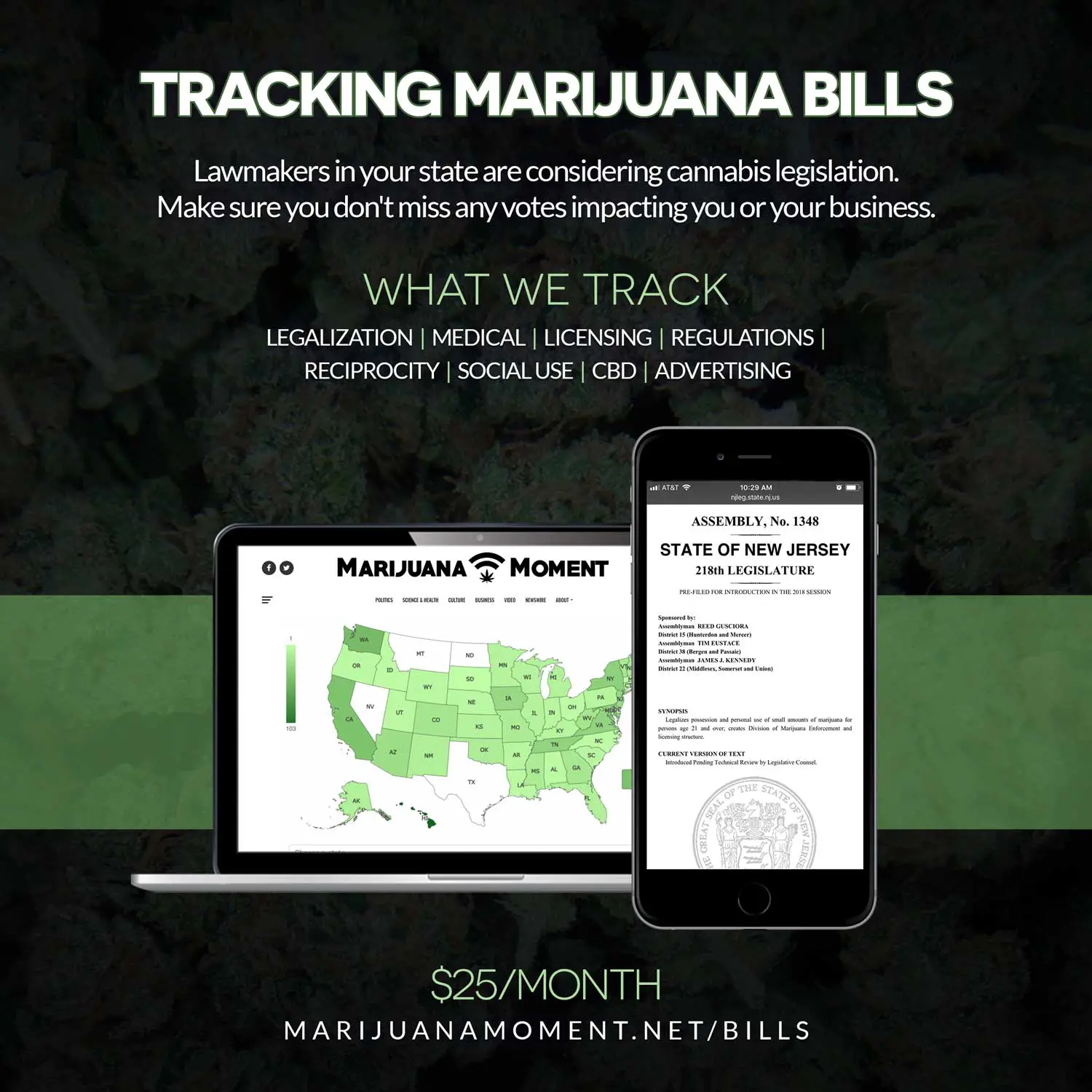
Learn more about our marijuana bill tracker and become a supporter on Patreon to get access.
—
Since 2018, cannabis products have been considered legal hemp if they contain less than 0.3 percent delta-9 THC on a dry weight basis.
The new legislation specifies that, within one year of enactment, the weight will apply to total THC—including delta-8 and other isomers. It will also include “any other cannabinoids that have similar effects (or are marketed to have similar effects) on humans or animals as a tetrahydrocannabinol (as determined by the Secretary of Health and Human Services).”
The new definition of legal hemp will additionally ban “any intermediate hemp-derived cannabinoid products which are marketed or sold as a final product or directly to an end consumer for personal or household use” as well as products containing cannabinoids that are synthesized or manufactured outside of the cannabis plant or not capable of being naturally produced by it.
Legal hemp products will be limited to a total of 0.4 milligrams per container of total THC or any other cannabinoids with similar effects.
Within 90 days of the bill’s enactment, the Food and Drug Administration (FDA) and other agencies will need to publish list of “all cannabinoids known to FDA to be capable of being naturally produced by a Cannabis sativa L. plant, as reflected in peer reviewed literature,” “all tetrahydrocannabinol class cannabinoids known to the agency to be naturally occurring in the plant” and “all other known cannabinoids with similar effects to, or marketed to have similar effects to, tetrahyrocannabinol class cannabinoids.”
The language slightly differs from provisions included in legislation that had previously advanced out of the House and Senate Appropriations panels, which would have banned products containing any “quantifiable” amount of THC, to be determined by the HHS secretary and secretary of agriculture.