Politics
Hawaii Senators Take Up Marijuana Legalization Bills After Key House Lawmakers Signal Reform Is Dead For 2026 Session

Hawaii senators have taken up a pair of bills to legalize marijuana—with one proposal contingent on federal reform or changes to the state Constitution and the other omitting provisions allowing for commercial sales.
Members of the Senate Health and Human Services Committee and Commerce and Consumer Protections Committee took up the measures—SB 2421 and SB 3275 from Sen. Joy San Buenaventura (D)—at a joint hearing on Tuesday.
The panels also discussed separate legislation allowing for the sale of certain hemp-derived cannabinoid products and permitting one-time medical cannabis sales for patients with pending registration applications.
The hearing comes after key House lawmakers signaled that legalization proposals that originated in that chamber would not be advancing in the 2026 session, citing a lack of sufficient support to get them crossed over and potentially enacted.
In the Senate, SB 2421 would create a Hawaii Cannabis and Hemp Office within the state Department of Commerce and Consumer Affairs to oversee the regulation of a adult-use cannabis market if there’s a constitutional change at the state level or change in federal marijuana laws permitting such a reform.
“In addition to legalizing medical use cannabis, numerous states and jurisdictions, including Hawaii, have opted to decriminalize the possession of small amounts of non-medical use cannabis,” the bill text states. “These decisions are motivated by a variety of compelling reasons, including the prioritization of more serious crimes, advancements in criminal justice reform, evolving public opinion, and long-standing social equity concerns within the context of cannabis regulation.”
The legislation also notes that states with legal cannabis markets “have witnessed substantial benefits from the revenue generated through taxes, including use and licensing fees, as well as general excise and sales taxes on the non-medical adult-use cannabis industry.”
“In light of the task force report, the legislature finds that the legalization of cannabis for personal use is a natural, logical, and reasonable outgrowth of the current science of and attitude toward cannabis. The legislature further finds that cannabis cultivation and sales hold the potential for economic development, increased tax revenues, and reduction in crime. Accordingly, the legislature is prepared to move forward with the legalization of non-medical adult-use cannabis if specific changes are made at the federal level or if the electorate approves a state constitutional amendment to legalize cannabis.”
The state attorney general’s office submitted testimony ahead of Tuesday’s hearing, recommending a series of changes related to hemp provisions, packaging requirements and penalties for the unlawful sale of cannabis to minors, for example.

It also noted that the legislation as drafted lacks specific language on appropriating funds for the regulation of a marijuana market, stating that it’s “essential that funds be appropriated for the timely implementation of a substantial regulatory program and for law enforcement, nuisance abatement, and a public education campaign prior to legalization, among other things.”
The Department of Commerce and Consumer Affairs, which would be tasked with regulating the adult-use cannabis market, testified that it “acknowledges the complex nature of the cannabis issue, involving considerations related to public health, safety, and economic opportunities. The commitment to public health protections, including an extensive public health and education campaign, reflects a responsible approach to mitigate potential risks associated with cannabis use.”
“The Department would like to underscore the significance of the clear separation of operations between the DCCA and the Hawaiʻi Cannabis and Hemp Office, as delineated in the proposed legislation,” it said. “This clear separation ensures that the Hawaiʻi Cannabis and Hemp office operates independently, fostering effective governance and decisionmaking in the field of cannabis regulation.”
For its part, the state Department of Health (DOH) said that while it “appreciates that this measure acknowledges and prioritizes the implementation of public health protections in connection with adult-use cannabis policy”—and regulating marijuana is “preferable to an unregulated illicit market”—legalization “should be expected to result in a net negative impact on the health of the public.”
“As such, the Department remains highly concerned about the public health and environmental impacts that the increased accessibility of cannabis and opening of an adult-use marketplace will bring,” it said.
Karen O’Keefe, state policies director of the Marijuana Policy Project (MPP), commented to the committees that it “makes sense to create an independent Hawaii Cannabis and Hemp Office,” and that advocates “also strongly support adult-use legalization, but urge the committee to amend the bill so legalization takes effect without waiting on a trigger.”
“While cannabis is not risk-free, it is far less dangerous than alcohol, tobacco and some medications. Hawai’i should treat adults like grown ups who are allowed to make their own decisions about the plant,” O’Keefe said. “While states have revised some laws to try to keep up with best practices, no cannabis legalization law has been repealed. That’s because they enjoy strong popular support, which increases post-legalization.”
In its written testimony, the Hawai’i Alliance for Cannabis Reform (HACR) said the bill from San Buenaventura represents “a thoughtful and comprehensive bill to legalize cannabis for adults 21 and older, contingent on a trigger, such as federal legalization or a constitutional amendment legalizing adult-use of cannabis in Hawai‘i.”
“Its regulatory framework puts public health, public and consumer education, and equity at the forefront,” the group said. “We are grateful that the bill would preserve access to medical cannabis, while creating new opportunities for small, Hawai‘i-based businesses, legacy growers, and social equity applicants.”
“Hawaii’s cannabis laws needlessly ensnare hundreds of people—disproportionately Native Hawaiian people—in its criminal justice system every year. Long after jail sentences are complete and fines are paid, cannabis arrest records derail lives, making it hard to get a job, education, and housing,” it continued. “SB 2421 would also include state-initiated expungement to stop derailing lives for many prior cannabis records.”
“Like alcohol prohibition a century ago, cannabis prohibition has failed. It wastes taxpayer dollars, perpetuates racial disparities, puts consumers at risk, and locks people up for minor offenses in overcrowded jails and prisons. SB 2421 would grow the economy, increase freedom, and promote health and safety. It would also move sales above ground so consumers can buy a lab-tested, regulated product and workers don’t face felonies.”
“We would prefer cannabis legalization without waiting for a trigger,” HACR said. “Voters support legalization, and the longer the delay, the more harm is done.”
Under the other proposal, SB 3275, adults 21 and older would be able to buy, possess and cultivate certain amounts of low-dose and low-THC cannabis for personal use.
The legislation further provides protections for parents and employees who use marijuana in compliance with the law, and it describes public safety safeguards such as packaging restrictions and cultivation standards.
The state attorney general’s office voiced opposition to the proposal, stating that, as currently drafted, the bill “effectively legalizes a level of non-medical adult-use cannabis without the necessary resources and regulatory scheme required to safely and effectively administer a non-medical adult-use cannabis program.”
MPP, meanwhile, said that “Hawai’i should treat adults like grown ups who are allowed to make their own decisions about the plant.”
“SB 3206 would take a significant step in that direction, but only if it also legalizes adult-use possession,” it said. “SB 3206 should also be revised to avoid pushing.”
HACR, for its part, said “Hawaii’s existing cannabis laws “needlessly ensnare hundreds of people—disproportionately Native Hawaiian people—in its criminal justice system.”
“Long after jail sentences are complete and fines are paid, cannabis arrest records derail lives, making it hard to get a job, education, and housing,” it said.
“Like alcohol prohibition a century ago, cannabis prohibition has failed. It wastes taxpayer dollars, perpetuates racial disparities, puts consumers at risk, and locks people up for minor offenses in overcrowded jails and prisons,” it said. “Legalizing and responsibly regulating cannabis and THC-infused products would grow the economy, increase freedom, and promote health and safety. It would also move sales above ground so workers don’t face felonies.”
“SB 3275 is a significant step in the right direction. However, it needs amendments to regulate and license cannabis sales, so that consumers can purchase a lab-tested, safe product, and to ensure responsible packaging and labeling,” it continued. “It’s time to move cannabis to the legal, regulated market and to stop derailing lives and pouring tax dollars down the drain.”
Historically, it’s been the Hawaii Senate that’s proved more amenable to cannabis reform in the legislature—and the 2026 session hasn’t been any different so far.
That was evidenced, in part, after key House lawmakers announced earlier this month that a pair of legalization bills that originated in the chamber were effectively dead for the year.
Despite renewed hopes that the proposals—including one from House Judiciary and Hawaiian Affairs Committee Chairman David Tarnas (D) that would have put the issue of legalization before voters at the ballot—would advance this year, the sponsor and House Speaker Nadine Nakamura (D) said there wasn’t enough support within the legislature to pass them this round.
At Tuesday’s joint Senate committee hearing, members also took up a bill, SB 3206 from San Buenaventura, that would allow licensed hemp processors to sell hemp-derived cannabinoid products containing up to 5 milligrams of THC per serving to adults 21 and older.
Flower hemp products could also be sold under the legislation. And the measure would further increase the THC limit for tinctures to 5 milligrams per serving.
The panels additionally discussed a proposal, SB 3315 sponsored by Sen. Angus McKelvey (D), that would let patients and caregivers make a one-time medical marijuana purchases while their applications to become registered participants in the program are processed.
State officials last month released a report on the potential economic impact of recreational marijuana legalization in the state, including revenue implications related to domestic and international tourism.
All told, researchers said survey data and comparative analyses indicate that Hawaii could see anywhere from $46-$90 million in monthly marijuana sales by year five of implementation, after accounting for a maximum 15 percent tax rate on cannabis products.
Hawaii’s Senate last year narrowly defeated a proposal that would have increased fivefold the amount of cannabis that a person could possess without risk of criminal charges.
Had the measure become law, it would have increased the amount of cannabis decriminalized in Hawaii from the current 3 grams up to 15 grams. Possession of any amount of marijuana up to that 15-gram limit would have been classified as a civil violation, punishable by a fine of $130.
A Senate bill that would have legalized marijuana for adults, meanwhile, ultimately stalled for the session. That measure, SB 1613, failed to make it out of committee by a legislative deadline.
While advocates felt there was sufficient support for the legalization proposal in the Senate, it’s widely believed that House lawmakers would have ultimately scuttled the measure, as they did last February with a legalization companion bill, HB 1246.
In 2024, a Senate-passed legalization bill also fizzled out in the House.
Last year’s House vote to stall the bill came just days after approval from a pair of committees at a joint hearing. Ahead of that hearing, the panels received nearly 300 pages of testimony, including from state agencies, advocacy organizations and members of the public.
Gov. Josh Green (D) signed separate legislation last year to allow medical marijuana caregivers to grow marijuana on behalf of up to five patients rather than the current one.
And in July, the governor signed another bill that establishes a number of new rules around hemp products in Hawaii, including a requirement that distributors and retailers obtain a registration from the Department of Health.
Lawmakers also sent a bill to the governor that would help speed the expungement process for people hoping to clear their records of past marijuana-related offenses—a proposal Green signed into law last April.
That measure, HB 132, from Tarnas, is intended to expedite expungements happening through a pilot program signed into law in 2024 by Green. Specifically, it will remove a distinction between marijuana and other Schedule V drugs for the purposes of the expungement program.
The bill’s proponents said the current wording of the law forces state officials to comb through thousands of criminal records manually in order to identify which are eligible for expungement under the pilot program.
Meanwhile, in November, Hawaii officials finalized rules that will allow medical marijuana dispensaries to sell an expanded assortment of products for patients—including dry herb vaporizers, rolling papers and grinders—while revising the state code to clarify that cannabis oils and concentrates can be marketed for inhalation.
The department also affirmed its support for federal marijuana rescheduling—a policy change that President Donald Trump ordered to be completed expeditiously but has yet to come to fruition.
Hawaii lawmakers recently advanced a bill to allow qualifying patients to access medical marijuana at health facilities.
—
Marijuana Moment is tracking hundreds of cannabis, psychedelics and drug policy bills in state legislatures and Congress this year. Patreon supporters pledging at least $25/month get access to our interactive maps, charts and hearing calendar so they don’t miss any developments.
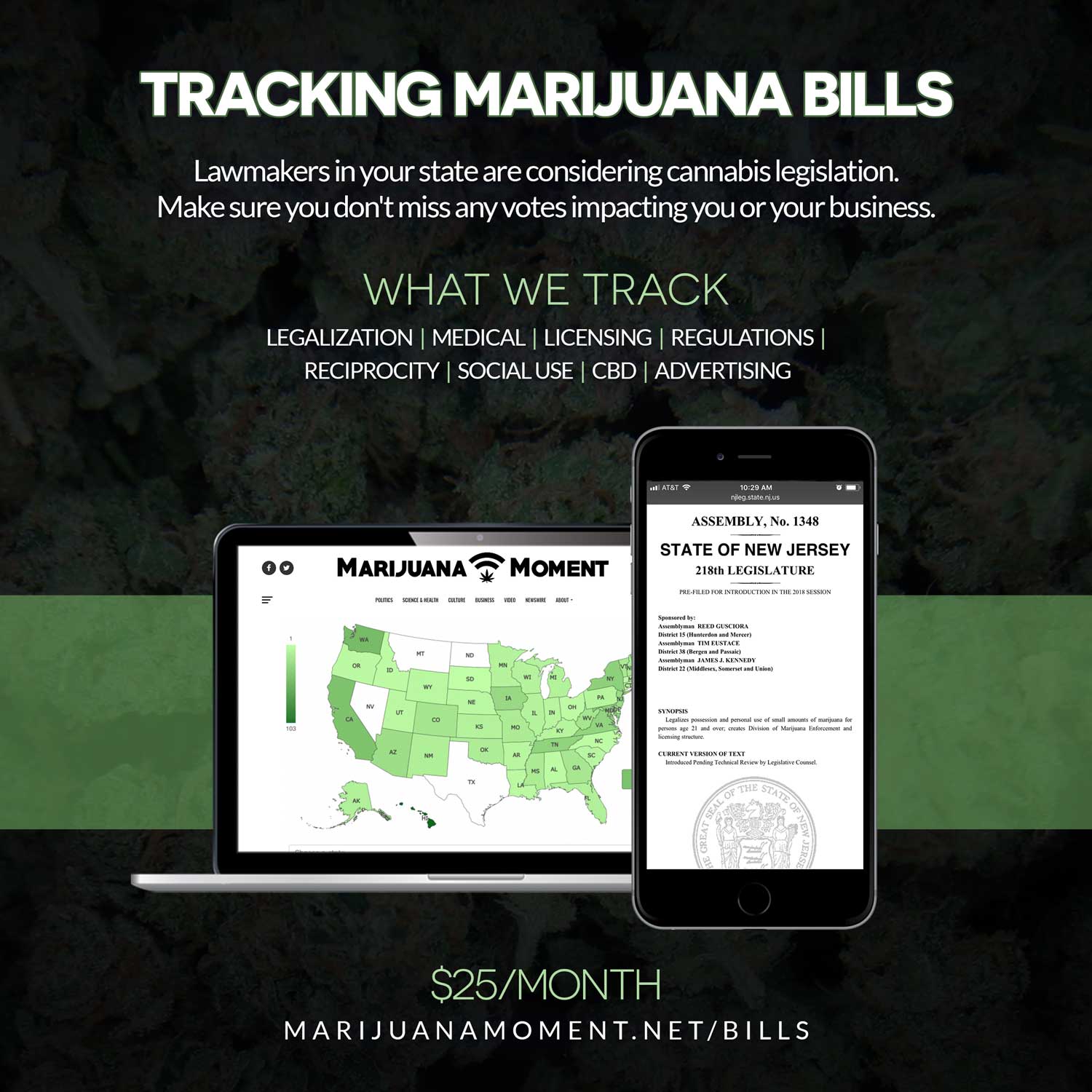
Learn more about our marijuana bill tracker and become a supporter on Patreon to get access.
—
Regulators are also launching a series of courses designed to educate physicians and other healthcare professionals about medical marijuana as the state’s cannabis program expands.
The underlying medical marijuana expansion bill signed by the governor in late June, in addition to allowing more patients to more easily access cannabis, also contains a provision that advocates find problematic.
Before lawmakers sent the legislation to Green, a conference committee revised the plan, inserting a provision to allow DOH to access medical marijuana patient records held by doctors for any reason whatsoever.
Photo courtesy of Philip Steffan.