Politics
Feds Defend Decision To Block Companies That Work With Marijuana Industry From Participating In Loan Program


The U.S. Department of Agriculture (USDA) is defending its decision to adopt a rule adding restrictions on companies that provide services to marijuana businesses, making it so participants in a particular government loan guarantee program are prohibited from receiving income from cannabis operations.
After posting the finalized rule in October 2024—amending a guaranteed loan program called OneRD through USDA’s Rural Utilities Service—the agency published a notice in the Federal Register last month responding to comments on the marijuana-related policy change.
Regarding cannabis, the rule bars lenders from working with an entity “if it derives income from illegal drugs, drug paraphernalia, or any other illegal product or activity as defined under Federal statute.”
“A borrower that intends to lease space or enter into a power purchase agreement with a marijuana dispensary is not eligible,” the rule says, “given our borrower would be receiving income from the marijuana operation which is a violation of Federal laws as marijuana is a controlled substance under Federal law and subject to Federal prosecution under the Controlled Substances Act (21 U.S.C. 812).”
USDA said in the latest notice that all four people who comments on the rule “indicated disagreement with the Agency’s decision to prohibit an entity that receives income from marijuana operations from receiving Agency assistance.”
“The Agency is aware that many states have legalized the production and sale of marijuana; however, marijuana is currently listed as a schedule I substance under the Controlled Substances Act,” it said. “As noted in the regulation any entity that derives income from illegal drugs, drug paraphernalia, or any other illegal product or activity are ineligible under Federal Statute.”
“No change to the rulemaking is necessary,” it said. “The Agency appreciates the comments received. The Agency confirms the final rule without change.”
It’s unclear whether the rule could be impacted if the attorney general follows through with President Donald Trump’s recent executive order directing the completion of a process to move marijuana from Schedule I to Schedule III of the CSA.
—
Marijuana Moment is tracking hundreds of cannabis, psychedelics and drug policy bills in state legislatures and Congress this year. Patreon supporters pledging at least $25/month get access to our interactive maps, charts and hearing calendar so they don’t miss any developments.
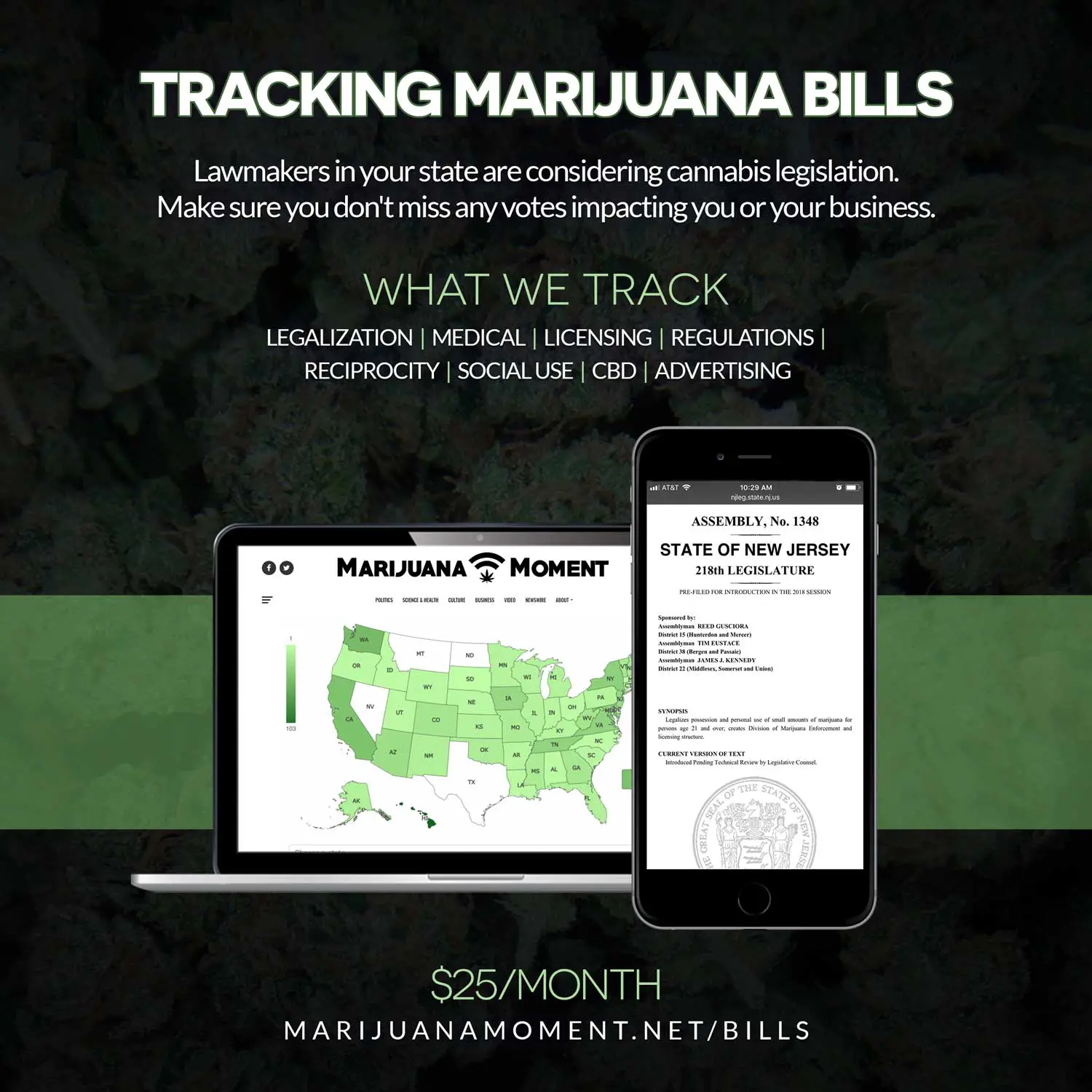
Learn more about our marijuana bill tracker and become a supporter on Patreon to get access.
—
Meanwhile, although the USDA rule is another reminder of the complications around the state–federal conflict on marijuana laws, the agency has been working to bolster the hemp industry since the legalization of that crop through the 2018 Farm Bill, including by appointing a number of industry stakeholders to a federal trade advisory committee that’s meant to support efforts to promote U.S.-grown cannabis around the world.
It also remains to be seen how the department will navigate a newly enacted law reimposing a federal ban on most consumable hemp products, which is the most profitable sector of the market.
In addition to directing marijuana rescheduling, Trump also took steps to remediate that policy change, which is currently set to be implemented next November. Specifically, he called for access to full-spectrum CBD products. The president said the cannabinoid holds therapeutic potential and should be covered for certain patients under Medicare.
Photo courtesy of Philip Steffan.