Politics
DEA’s New ‘Drug Quiz’ Admits That Youth Marijuana Use Is Declining As Legalization Expands

The Drug Enforcement Administration (DEA) is acknowledging that, even as more states have legalized marijuana, youth cannabis use has “declined” over the past several decades.
As part of an online quiz on DEA’s “Just Think Twice” platform, the agency asked about a variety of drug trends, including questions about substance use disorder, drug overdose deaths, signs of a heroin overdose and cannabis use among youth.
Notably, the answer to one question about past-year marijuana use by adolescents and teens directly contradicts a frequently debunked prohibitionist narrative about the risks of state-level legalization, with anti-cannabis organizations claiming the reform would drive more teens to use marijuana.
That’s not the case, DEA said.
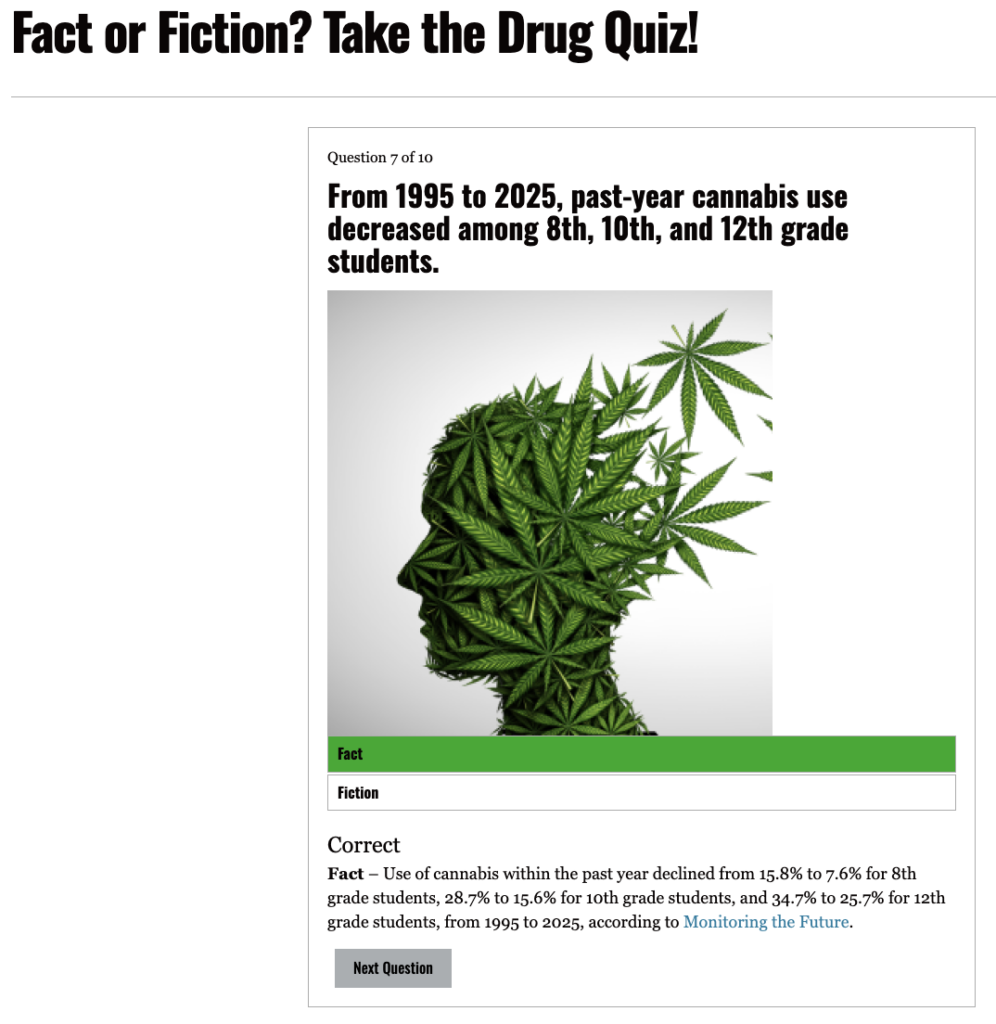
“From 1995 to 2025, past-year cannabis use decreased among 8th, 10th, and 12th grade students,” reads one of the items, with respondents asked to decide whether the statement is “Fact” or “Fiction.”
It turns out, contrary to prohibitionist fears, it’s a fact that teen marijuana use has declined since states began enacting laws to allow medical or recreational use.
“Use of cannabis within the past year declined from 15.8 percent to 7.6 percent for 8th grade students, 28.7 percent to 15.6 percent for 10th grade students, and 34.7 percent to 25.7 percent for 12th grade students, from 1995 to 2025,” the quiz explains once the respondent makes their choice, citing data from the National Institute on Drug Abuse- (NIDA) backed national Monitoring the Future (MTF) survey.
Via DEA.
For those who’ve been closely following cannabis policy and research, the question was likely a no-brainer. Numerous studies have found that rates of youth marijuana use either declines or remains stable after states enact legalization, which advocates point to as evidence of the effectiveness of regulations over criminalization.
When adults have legal access to cannabis at age-gated licensed retailers, many transition away from the illicit market, where sellers generally aren’t checking IDs or following other protocols ensuring product safety and quality. States with legalization laws also tend to incorporate public education initiatives into their programs to deter teens from misusing cannabis.
Of course, DEA didn’t endorse marijuana legalization in the quiz answer. And in its answer to another question about cannabis—specifically quizzing people about whether states are legalizing because marijuana “has been proven not to have adverse effects”—the agency took the opportunity to link the plant to a variety of health issues and impaired driving, despite conflicting evidence on those claims.
“While several states have legalized marijuana, the drug is still linked to mental health problems like anxiety and psychosis, can slow brain development, and is the substance most often found in the blood of drivers involved in and frequently responsible for car crashes,” DEA said.
This is one of the latest examples of DEA using interactive online quiz formats as part of its effort to raise awareness about drug issues. Last year, for example, the agency DEA put out a five-question quiz to assess people’s drug slang knowledge for substances such as marijuana, MDMA and fentanyl.
Not unlike its drug emoji guide that DEA recirculated last year, the test made several claims about the terminology used by consumers and sellers that might give those populations pause.
DEA’s emoji decoding guide has been around, and somewhat updated, since 2021, drawing some criticism from consumers who’ve questioned the credibility of the agency’s interpretation of how people communicate about drugs in texts and social media.
DEA, which is currently involved in a process to consider rescheduling marijuana—has long been considered out of touch with youth culture as it concerns drug use and sales. And it’s been partnering with other anti-drug groups recently that hasn’t done much to disabuse the public of that perception.
For instance, to mark “National Prevention Week,” DEA promoted a campaign last May that encouraged people to share memes with dubious claims about the effects of cannabis—including the theory that it is a “gateway drug” to using other substances.
In 2023, DEA also advised young people that, rather than doing drugs, they should focus on becoming Instagram influencers. The agency promoted tips on how to get a “natural high” as an alternative to drugs, sharing what it said were “7 Better Highs” such as becoming famous on Instagram, playing video games and going to a pet store to look at animals.
In the background, cannabis advocates and stakeholders have been closely monitoring agencies including DEA as they await action on marijuana rescheduling—a process President Donald Trump in December directed the attorney general to quickly finalize. Moving cannabis from Schedule I to Schedule III of the Controlled Substances Act (CSA), as proposed, would not federally legalize it, however.