Science & Health
California Officials Award $30 Million In Marijuana Revenue To Support Research On THC Drinks, Terpenes And Tribal Cannabis Sales


California officials have awarded nearly $30 million in grants for marijuana-focused academic research projects.
The government-funded studies will focus on issues such as cannabis use by older people, the effects of THC beverages, the therapeutic potential of novel cannabinoids, how compounds like terpenes affect product flavoring, tribal participation in the legal market and the environmental impact of marijuana licensing programs.
This marks the third round of grants delivered through the program—which is funded by marijuana tax revenue—raising the total distributions to about $80 million.
The Department of Cannabis Control (DCC) said it prioritized proposals in research areas including educational methods of improving public health and safety, crop yields, state and local marijuana policies, consumer preferences, environmental sustainability and other topics.
“All research findings will be made available at no cost to the public to support broad access to rigorous, science-backed research while contributing to the national understanding of cannabis,” the department said in a press release on Monday.
“DCC received 149 proposals,” it said. “Funding decisions were based on researchers demonstrating strong scientific methodologies, the potential of their research to improve public understanding of cannabis and its effects, and to inform future policymaking.”
Here are some examples of grant awardees and their research initiatives:
- UC San Diego: Cannabis Use and Product Selection Among Older Adults. This study seeks understanding of how older adults weigh product features like potency, cost, and safety when purchasing cannabis. Findings will inform labeling, education, and retail strategies to improve consumer safety and support evidence-based cannabis policy for aging populations. ($643,428)
- UC San Francisco: Clinical pharmacology of commercially available THC-infused beverages. This study will measure THC absorption, onset, and duration across multiple infused-beverage formulations under real-world consumption conditions. Results will inform product safety standards, labeling accuracy, and consumer guidance for low-dose beverage products to minimize impairment risks. ($1,975,523.03)
- UC Davis: Pathways to Partnership with the Tribal Cannabis Market. This study will examine California’s tribal cannabis markets and identify models for tribal–state collaboration. The project will produce regulatory templates and partnership pathways to enhance consumer safety, environmental sustainability, and economic opportunities while respecting tribal sovereignty. ($698,537)
- UC San Francisco: Cannabinoids and the brain: Focused investigations of therapeutic application and early-life risk. This project will examine how exposure to specific cannabinoids affects brain development, neuroinflammation, and therapeutic pathways. The work will clarify safe dosage thresholds and long-term neurological risks, advancing cannabinoid-based medicine and public health protection. ($1,993,986.41)
- UC Los Angeles: Cannabinoid Therapeutics: Synthesis, Binding, Safety, and Computations. This project will study and characterize novel cannabinoids with therapeutic potential. ($2,000,000)
- UC San Diego: Price and Tax Trends and Their Effects on Cannabis Sales: Evidence from Multi-State Retail Scanner Data. Using comprehensive retail scanner data across 20+ U.S. states, this project will analyze consumer responsiveness to price changes and tax rates, providing actionable insights to guide equitable, health-oriented taxation policies. ($1,219,052)
- UC Berkeley: Cannabis Crop Yields: Survey & Remote Sensing. This project will estimate cannabis crop yield variability across indoor, outdoor, and mixed-light cultivation systems. The resulting models will improve crop-production estimates and inform regulatory oversight and market forecasting for California’s legal cannabis sector. ($1,807,977)
- UC Los Angeles: Characterization of Naturally Occurring Organoleptic Compounds for Inhalable Cannabis Regulation. This study will build a Flower Flavor-Compound Reference Dataset defining natural terpene concentration ranges to distinguish authentic plant flavors from prohibited additives, supporting DCC policy and consumer safety. ($1,234,746)
- San Diego State: Pesticide and Allergen Exposure Among Cannabis Workers: An Occupational Health Study. Through a community-based field study of 150 participants, this research uses silicone wristbands for passive chemical sampling and advanced analysis to assess pesticide and terpene exposure among cannabis workers across cultivation types. Results will provide the first comprehensive exposure profile for California’s cannabis workforce, guiding occupational health protections and regulatory enforcement. ($1,157,196)
- UC Berkeley: Assessing the Environmental Benefits of Cannabis Licensure. This study compares licensed and unlicensed cultivation sites to quantify improvements in water, habitat, and pesticide management following licensure. ($731,754)
One of the earlier rounds, in 2023, focused on studies investigating novel cannabinoids like delta-8 THC, the genetics of “legacy” strains from the state and monopolies and unfair competition in the market.
Meanwhile, in May, the Governor’s Office of Business and Economic Development (GO-Biz) announced the recipients of over $52 million in community reinvestment grants to nonprofits and local health departments, also funded by marijuana tax revenue.
That marked the seventh round of cannabis-funded California Community Reinvestment Grants (CalCRG) under the state program.
Legalization in California has created a number of new grant programs aimed at addressing the consequences of marijuana prohibition and attempting to nurture a strong, well-regulated legal industry.
—
Marijuana Moment is tracking hundreds of cannabis, psychedelics and drug policy bills in state legislatures and Congress this year. Patreon supporters pledging at least $25/month get access to our interactive maps, charts and hearing calendar so they don’t miss any developments.
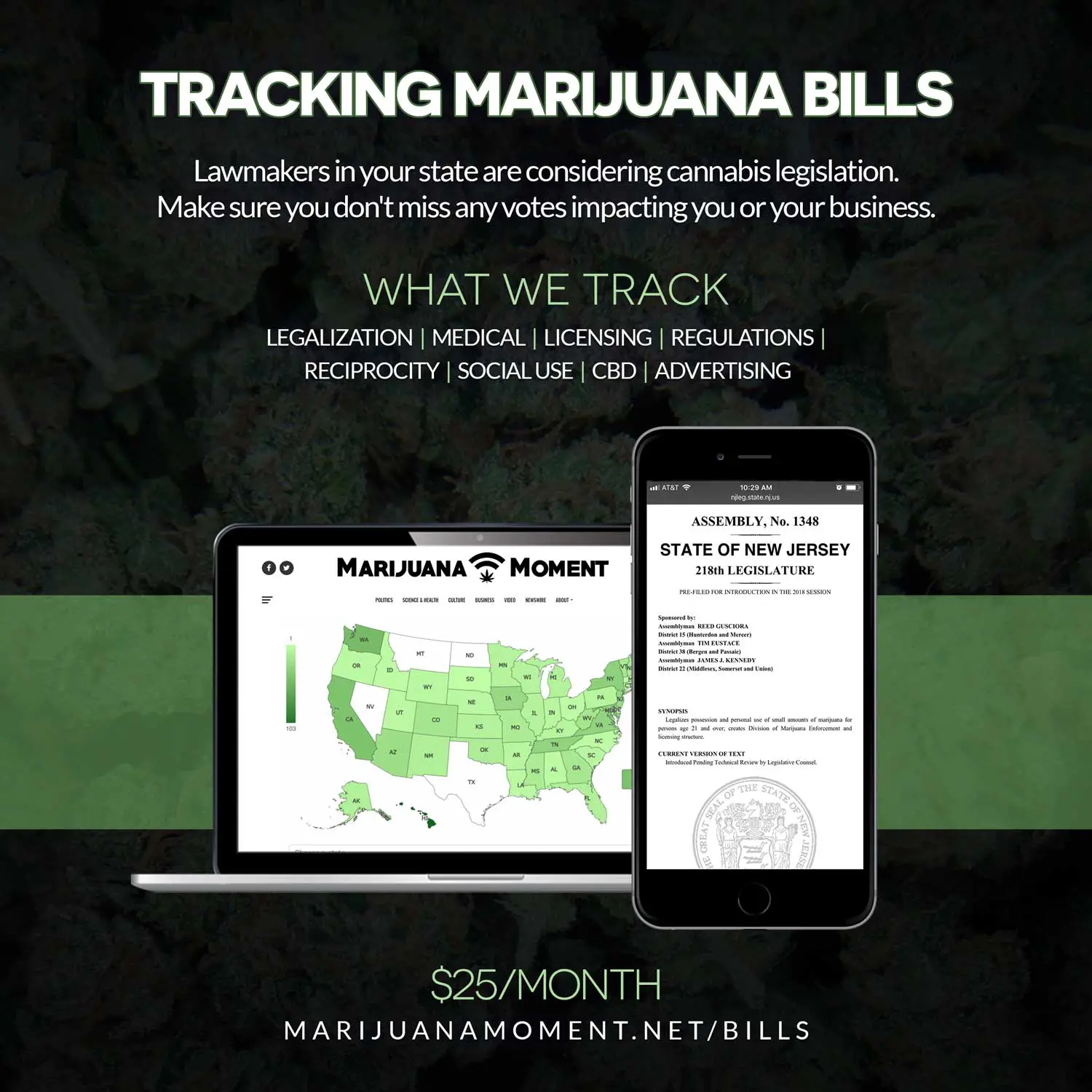
Learn more about our marijuana bill tracker and become a supporter on Patreon to get access.
—
Meanwhile, in October the governor of California vetoed a bill that would have allowed certain marijuana microbusinesses to ship medical cannabis products directly to patients via common carriers like FedEx and UPS, stating that the proposal “would be burdensome and overly complex to administer.”
Also that month, Gov. Gavin Newsom (D) signed a bill aimed at streamlining research on marijuana and psychedelics.
In September, the governor also signed legislation into law to put a pause on a recently enacted tax hike on marijuana products.