Politics
Bipartisan Texas Lawmakers Want Hemp THC Regulated Instead Of Banned, With GOP Rep Saying Market Is ‘Too Big To Ignore’

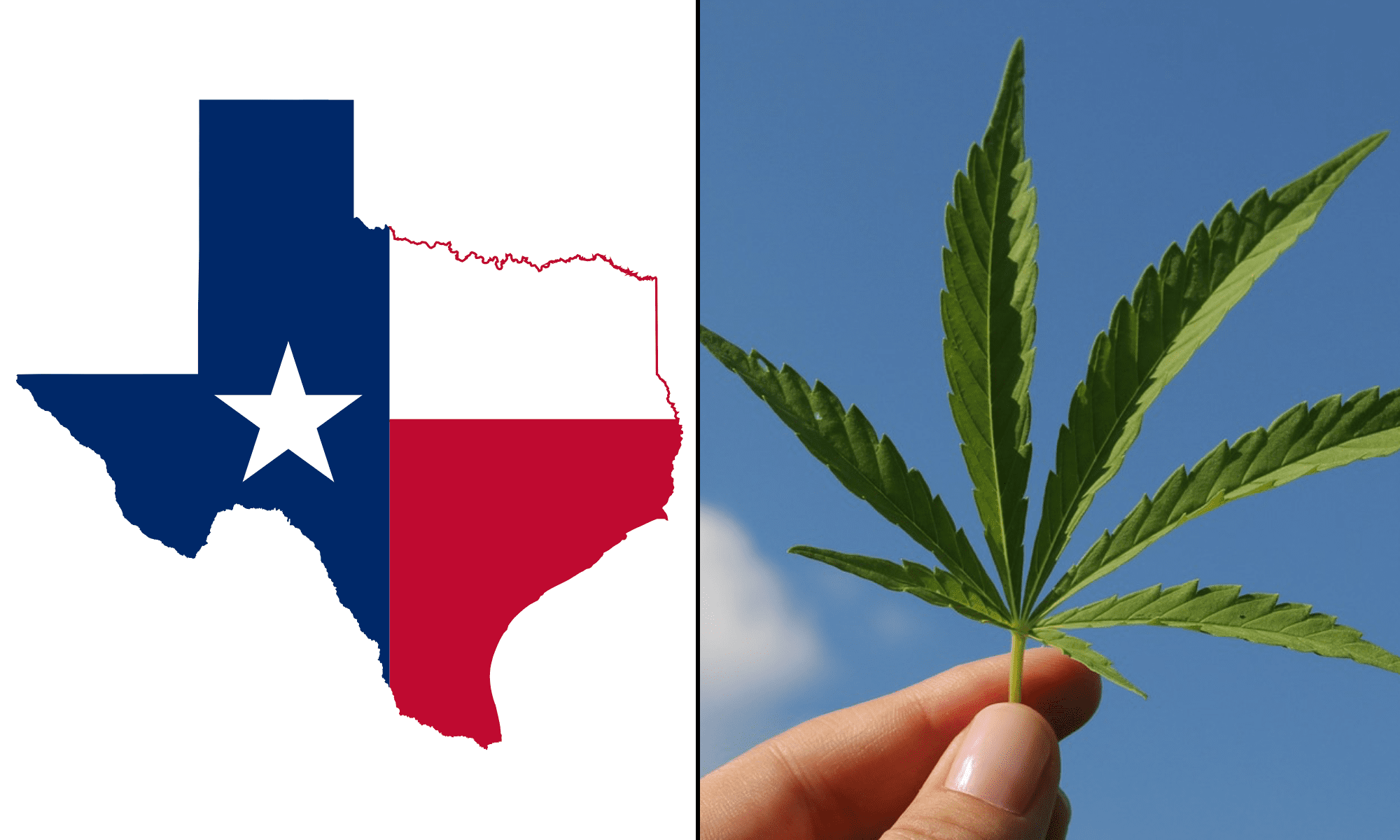
Bipartisan Texas lawmakers say the stage is set to advance legislation next session establishing regulations for hemp THC products, with growing understanding among their colleagues that prohibition fails to effectively address concerns about the cannabis market.
During a panel at the Texas Cannabis Policy Conference last week, state Sen. Nathan Johnson (D) and Rep. Drew Darby (R) spoke about the future of hemp policy in the Lone Star State. While marijuana legalization may remain out of immediate reach in the Texas legislature, they said it’s been made clear to lawmakers that hemp regulations must be enacted.
Darby said he himself was “initially predisposed toward prohibition,” but he credited testimony from “veterans, patients, business owners and families” for changing his mind and leading him to conclude that “prohibition doesn’t work.”
“People were finding relief. Veterans were trying to avoid opioids. Small businesses had invested their livelihoods. The real-life impacts were undeniable,” he said at the event hosted by the Texas Cannabis Policy Center. “That’s when we shifted direction—toward regulation instead of prohibition. Let’s regulate it, police it, tax it and protect Texans. That process was transformational for me.”
As far as specific regulatory policy is concerned, the lawmaker said future regulations must promote “public safety” and further mitigating youth access. He also signaled that banning synthetic or adulterated hemp THC products remains a priority.
“That’s what worries me most. Entirely synthetic derivatives, poorly understood, poorly labeled,” he said. “We’ve seen real harm. That’s something we must address legislatively..”
“In my district, hemp shops are near schools and universities. If you don’t self-police—ID checks, responsible marketing—you’re inviting backlash,” he said. ” I get photos of THC gummies displayed next to candy. That will blow this up fast. If you want this industry to survive, support regulation. Protect kids. Be responsible.”
While it remains to be seen how state lawmakers might approach hemp regulations in the coming session, there is a complication at the federal level. A large-scale spending bill President Donald Trump signed last year included provisions to effectively ban most consumable hemp products, though stakeholders and certain legislators have expressed confidence that policy will be reversed or at least delayed before it’s set to take effected this coming November.
In the interim, Texas regulators have taken a series of steps to enact rules around consumable hemp products over recent month, which began after Gov. Greg Abbott (R) vetoed a bill last year that would’ve effectively eradicated the state’s hemp market.
The governor’s veto “sets a policy direction,” Darby said.
“The legislature should take that seriously. Right now, there’s confusion—between legislative intent, agency rulemaking, and federal policy changes,” he said. “This is one of the most fluid policy environments I’ve seen. But this industry is too big to ignore. We will have to address it next session.”
Johnson, for his part, said 2025 was a “strange year” as the Senate “became, frankly, an anti-THC machine.”
“The legislature fell asleep at the wheel while this industry grew. Lack of regulation invites collapse,” he said. “We need a framework that protects consumers, supports responsible businesses, and avoids criminalizing people for making personal health decisions.”
He added that Abbott’s veto of the prohibitionist plan “happened because of activism—particularly Republican activists.”
“The polling was terrible for prohibition. The governor made a clear statement: Let adults be adults—regulate it. That changed everything,” he said. “Credibility matters. If you come in only talking about profits or benefits, you lose trust. Bring us the problems too. Tell us what can go wrong and how to fix it. That turns skeptics into allies.”
Johnson also told The Texas Tribune that he does believe Lt. Gov. Dan Patrick (R), a staunch prohibitionist, “will try” to end the hemp market again during the 2027 session. However, “I don’t think the House is going to go with it again.”
In late December, meanwhile, the Department of State Health Services (DSHS) released a set of proposed rules to regulate the state’s hemp market—including provisions related to age-gating, licensing fees, testing requirements, packaging restrictions and more in response to an executive order the governor signed in September.
The proposal would also shift hemp to a total THC standard, rather than the current one that limits delta-9 THC content alone, which advocates say will eliminate some popular products from the market.
One of the more significant provisions makes it so consumable hemp products could not be sold to people under 21. That policy is already in place under an emergency rule the agency adopted in October, so officials are now seeking to finalize it.
After the governor issued the emergency order barring hemp sales, the Texas Alcoholic Beverage Commission (TABC) separately put forward temporary emergency rules to codify the policy change—and in December, it released plans to adopt an amended regulation on the issue permanently after receiving public and stakeholder input.
Meanwhile, state officials with the Department of Public Safety (DPS) separately conditionally approved nine new medical marijuana business licenses in December as part of a law that’s being implemented to significantly expand the state’s cannabis program.
The department will issue conditional licenses to three additional dispensaries by April 2026.
This represents a major change to the program, as there are currently only three dispensaries licensed to operate in Texas.
DPS in October adopted additional rules to increase the number of licensed dispensaries, establishing security requirements for “satellite” locations and authorizing the revocation of licenses for certain violations.
DSHS also recently finalized rules allowing doctors to recommend new qualifying conditions for cannabis patients and creating standards for allowable low-THC inhalation devices.
For what it’s worth, a survey from a GOP pollster affiliated with President Donald Trump found that Texas Democratic and Republican voters are unified in their opposition to the hemp ban proposal.
Image element courtesy of AnonMoos.